

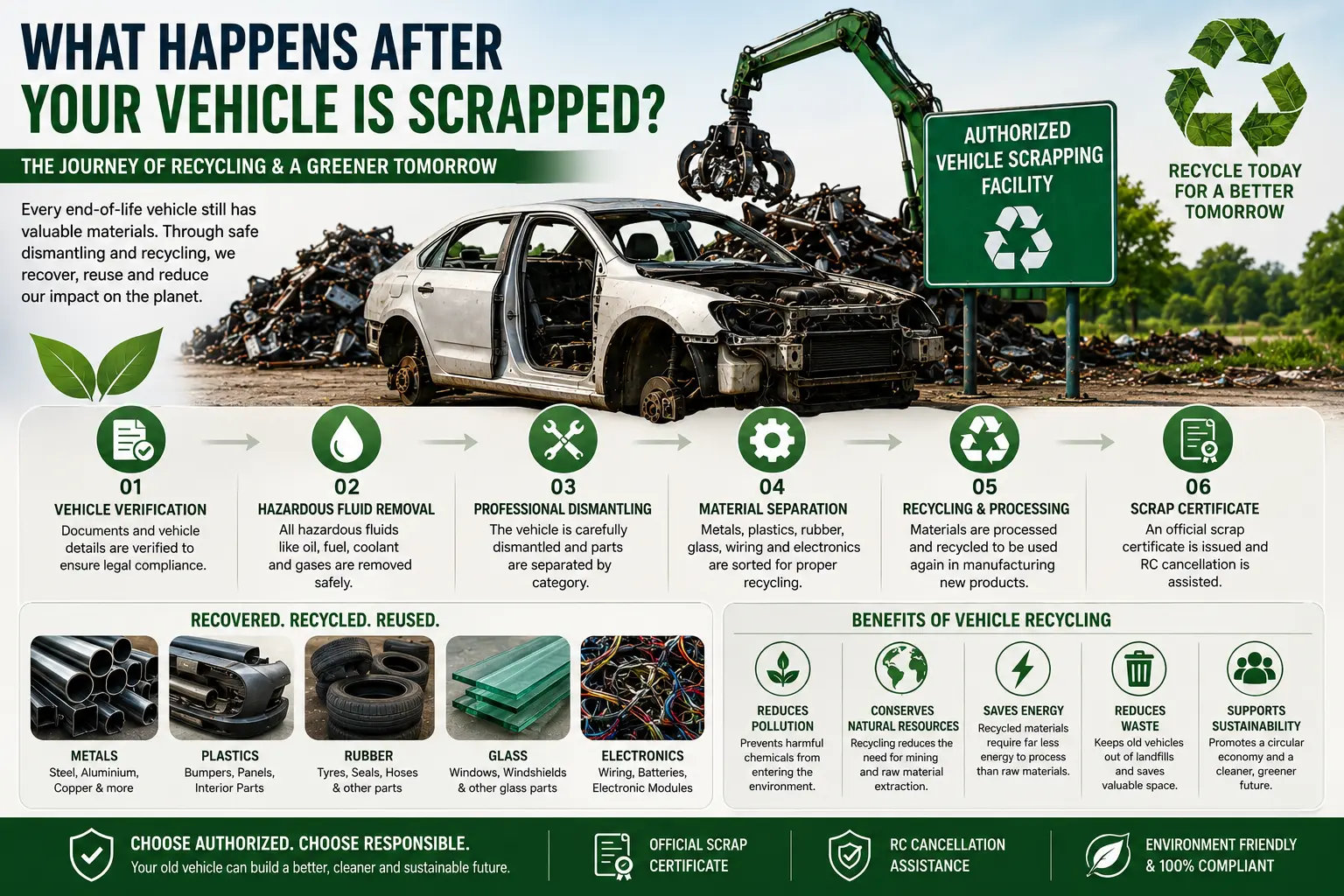
What Happens After Your Vehicle Is Scrapped? | Inside the Vehicle Recycling Process
Have you ever wondered what happens after your old vehicle reaches an authorized vehicle scrapping facility? Many people think a vehicle is simply crushed into metal, but the reality is very different. Modern scrapping centers follow scientific dismantling and recycling procedures that recover valuable materials while protecting the environment.
Every end-of-life vehicle contains reusable metals, plastics, glass, rubber, and electronic components. These materials are carefully separated and recycled for future use in different industries.
♻ Valuable Materials Recovered from Every Vehicle
🚗 Metals
Steel, aluminium and copper are recovered for manufacturing new products.
🛞 Rubber & Plastic
Tyres, plastic panels and interior components are recycled.
🔋 Electronics
Batteries, wiring and electronic modules are safely processed.
📄 Step 1 – Vehicle Verification
Before dismantling begins, the scrapping facility verifies ownership and vehicle details to ensure complete legal compliance.
- ✔ Registration Certificate (RC)
- ✔ Owner Identity Verification
- ✔ Chassis Number Verification
- ✔ Engine Number Verification
- ✔ Documentation Check
⚠ Step 2 – Safe Removal of Hazardous Materials
Harmful substances are removed before dismantling to prevent environmental pollution.
- Engine Oil
- Brake Fluid
- Coolant
- Fuel
- Battery
- Air Conditioning Gas
🔧 Step 3 – Professional Vehicle Dismantling
Instead of crushing the vehicle immediately, trained technicians dismantle it section by section so every recyclable material can be recovered.
- ✔ Metal Components
- ✔ Plastic Parts
- ✔ Glass Panels
- ✔ Rubber Components
- ✔ Electrical Wiring
- ✔ Electronic Parts
🏭 Step 4 – Metal Recovery & Recycling
Recovered steel, aluminium and copper are cleaned, processed and supplied to manufacturing industries for producing new vehicles, construction materials and industrial equipment.
🌍 Environmental Benefits of Vehicle Recycling
🌱 Less Pollution
Proper disposal of hazardous materials protects the environment.
♻ Resource Conservation
Recovered metals reduce the need for mining new raw materials.
⚡ Energy Saving
Recycling metals requires much less energy than producing new metals.
⭐ Why Choose an Authorized Vehicle Scrapping Facility?
- ✔ Government Approved Process
- ✔ Scientific Vehicle Dismantling
- ✔ Official Scrap Certificate
- ✔ RC Cancellation Assistance
- ✔ Environment-Friendly Recycling
- ✔ Transparent Documentation
❓ Frequently Asked Questions
Can every part of a vehicle be recycled?
Most vehicle components can be recycled or reused, while hazardous materials are safely disposed of according to environmental regulations.
What happens to old vehicle batteries?
Vehicle batteries are sent to certified recycling facilities where valuable materials are recovered safely.
Why is vehicle recycling important?
Recycling reduces pollution, conserves natural resources, saves energy and supports sustainable manufacturing.
🚘 Give Your Old Vehicle a Responsible New Beginning
Choose an authorized vehicle scrapping facility to ensure safe recycling, proper documentation and environmentally responsible disposal of your end-of-life vehicle.
📞 Call Now 💬 WhatsApp
Add a Comment