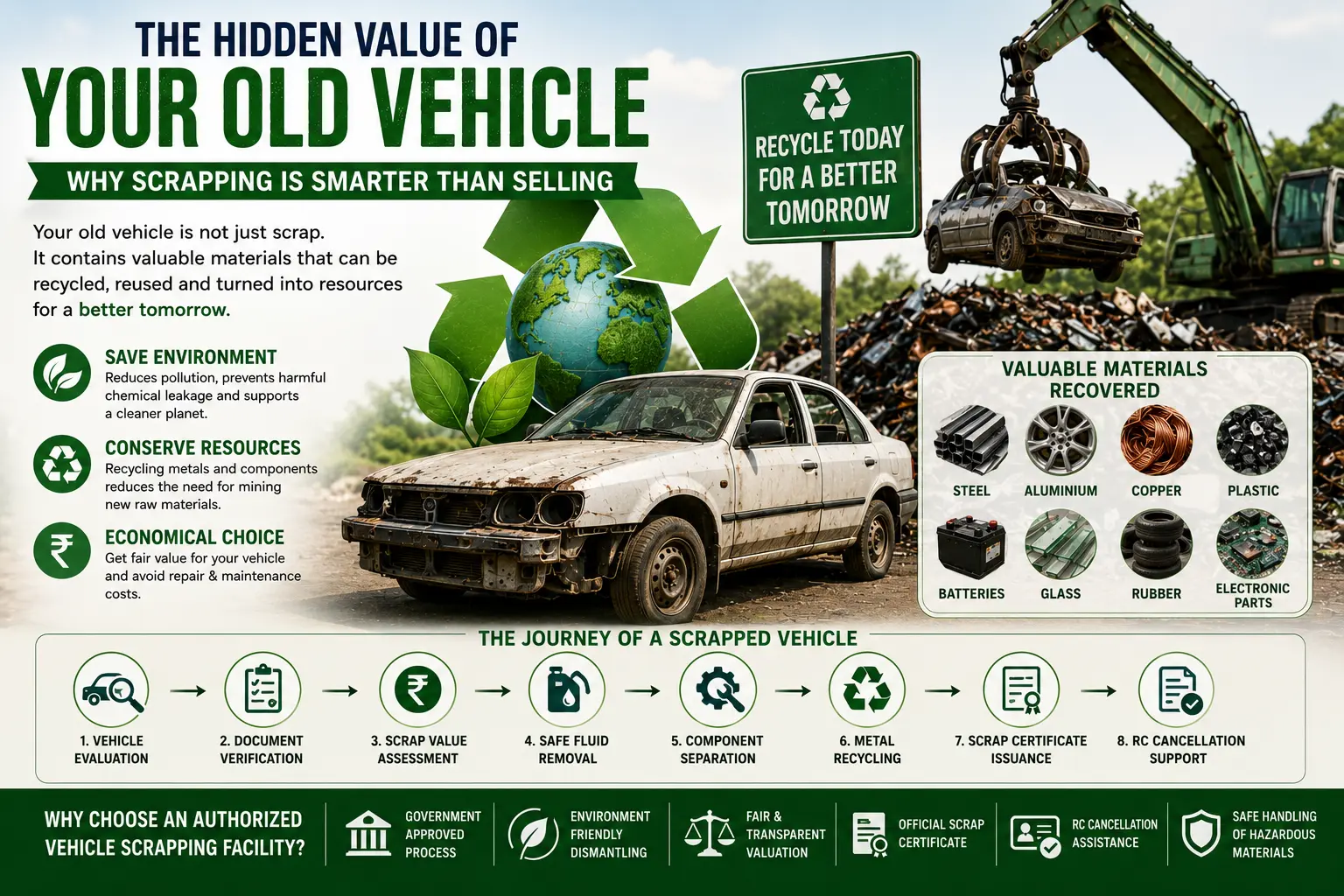
How to Prepare Your Vehicle Before Scrapping | A Complete Owner’s Checklist

How to Prepare Your Vehicle Before Scrapping

How to Prepare Your Vehicle Before Scrapping | A Complete Owner's Checklist

Before sending your old car, bike, truck, or commercial vehicle for scrapping, it is important to prepare it properly. A little planning helps you complete the scrapping process smoothly, protects your personal information, and ensures that you receive a fair vehicle evaluation.

This checklist will help every vehicle owner understand the essential steps to take before handing over a vehicle to an authorized vehicle scrapping facility.

βœ… Why Preparing Your Vehicle Is Important

  • βœ” Faster documentation process
  • βœ” Better vehicle inspection
  • βœ” Protection of personal belongings
  • βœ” Easier ownership verification
  • βœ” Smooth RC cancellation
  • βœ” Hassle-free scrapping experience

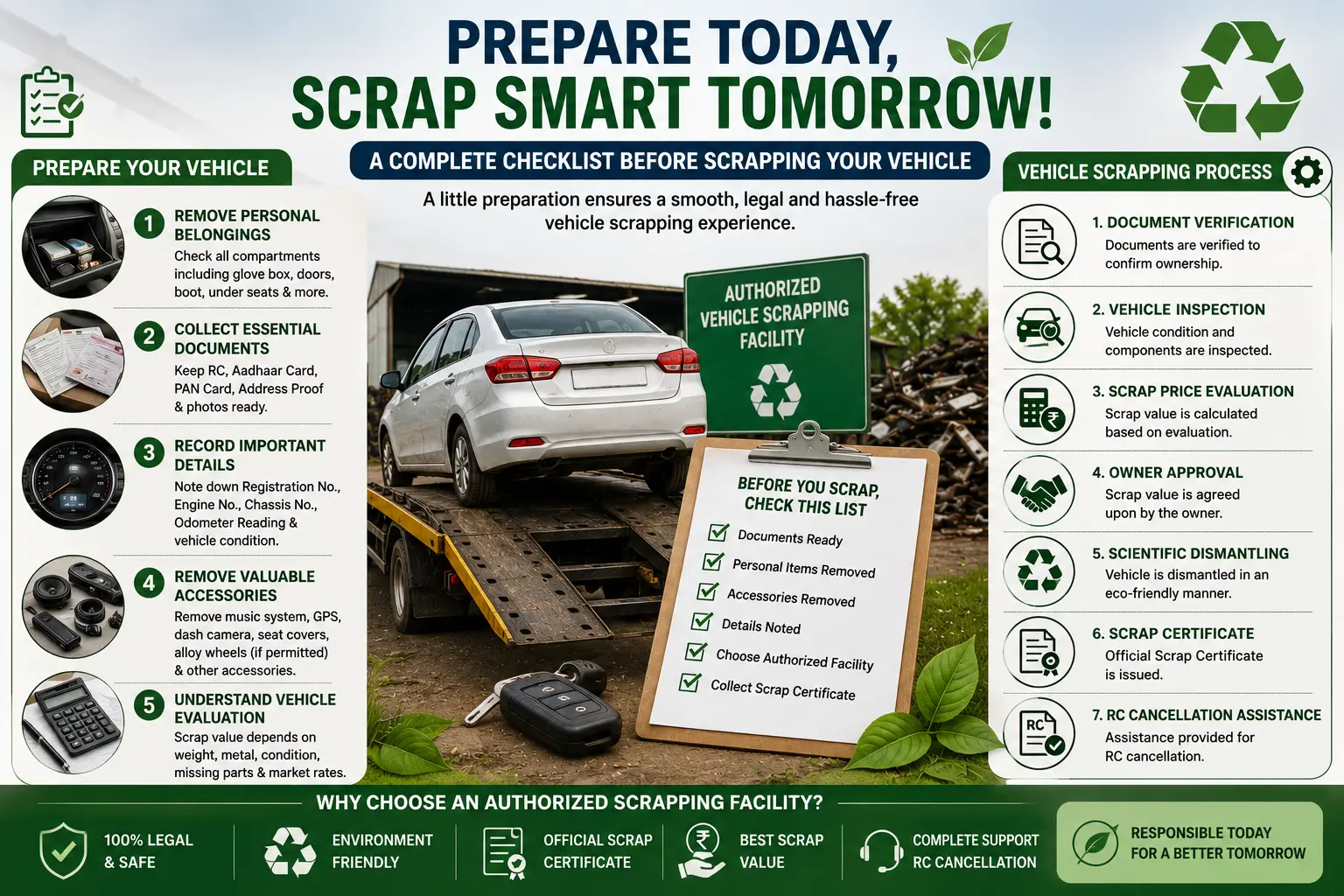
🧳 Step 1 – Remove Personal Belongings

Carefully inspect every storage area inside the vehicle before scrapping.

  • Glove Box
  • Dashboard Compartments
  • Door Pockets
  • Boot / Trunk
  • Under the Seats
  • Roof Storage
  • Tool Kit Box

πŸ“„ Step 2 – Keep All Required Documents Ready

Required Documents

  • Original RC
  • Aadhaar Card
  • PAN Card
  • Address Proof
  • Passport Size Photo
  • Mobile Number

Benefits

  • Fast Verification
  • Easy Documentation
  • Quick Approval
  • Legal Compliance

πŸ“Έ Step 3 – Record Vehicle Information

Before scrapping, note down or photograph important vehicle details for your personal records.

  • βœ” Registration Number
  • βœ” Engine Number
  • βœ” Chassis Number
  • βœ” Odometer Reading
  • βœ” Vehicle Condition Photos

πŸ”§ Step 4 – Remove Valuable Accessories

  • Music System
  • Dash Camera
  • Mobile Holder
  • GPS Device
  • Seat Covers
  • Floor Mats
  • Custom Accessories (If Permitted)

πŸ’° Step 5 – Understand Vehicle Evaluation

Authorized scrapping facilities determine vehicle value using several important factors.

  • βœ” Vehicle Weight
  • βœ” Metal Recovery
  • βœ” Vehicle Condition
  • βœ” Missing Components
  • βœ” Current Scrap Metal Prices

πŸ“‹ Authorized Vehicle Scrapping Process

1️⃣ Document Verification
2️⃣ Vehicle Inspection
3️⃣ Scrap Price Evaluation
4️⃣ Owner Approval
5️⃣ Scientific Dismantling
6️⃣ Scrap Certificate Issued
7️⃣ RC Cancellation Assistance

⚠ Common Mistakes to Avoid

  • ❌ Leaving personal belongings inside
  • ❌ Forgetting original documents
  • ❌ Choosing unauthorized scrap dealers
  • ❌ Ignoring RC cancellation
  • ❌ Accepting verbal quotations only
  • ❌ Forgetting to collect the Scrap Certificate

⭐ Why Choose an Authorized Vehicle Scrapping Facility?

πŸ“œ Legal Process

Government-approved vehicle dismantling.

🌱 Eco-Friendly

Safe recycling with environmental compliance.

πŸ“„ Complete Support

Scrap Certificate and RC cancellation assistance.

❓ Frequently Asked Questions

Can I remove accessories before scrapping?

Yes. Personal accessories such as music systems, GPS devices, and dash cameras can usually be removed before scrapping.

Do I need to clean my vehicle?

Cleaning is optional, but removing personal belongings and documents is strongly recommended.

Why should I keep copies of my vehicle documents?

Copies may be useful for future ownership verification and documentation purposes.

🚘 Prepare Today for a Smooth Vehicle Scrapping Experience

Follow this simple checklist before scrapping your vehicle to ensure a safe, legal, and hassle-free process. Contact an authorized vehicle scrapping facility today for professional assistance.

πŸ“ž Call Now πŸ’¬ WhatsApp

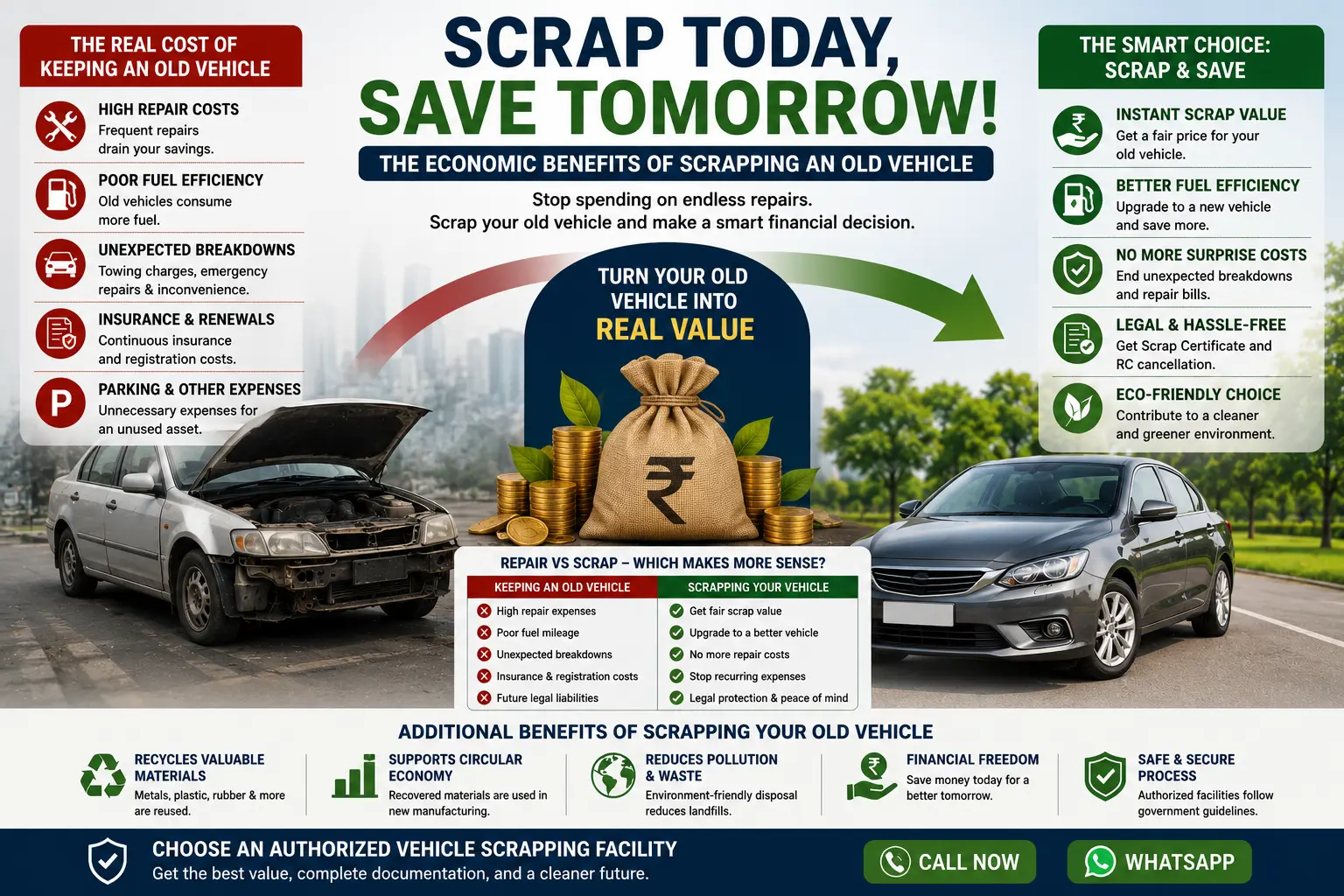
The Hidden Costs of Keeping an Old Vehicle: Why Scrapping Can Be the Smarter Choice

Hidden Costs of Keeping an Old Vehicle

The Hidden Costs of Keeping an Old Vehicle | Why Vehicle Scrapping Can Be the Smarter Choice

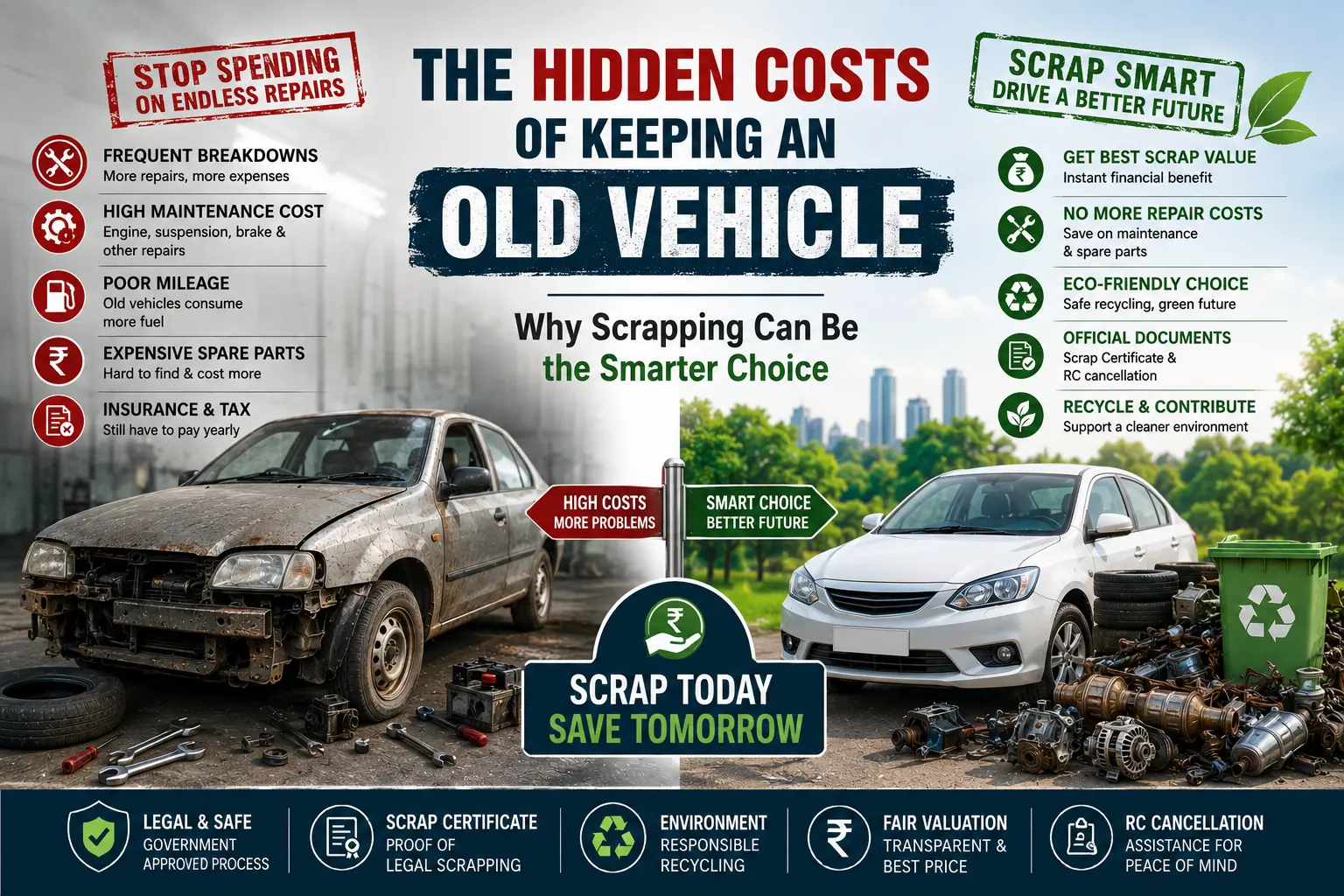
Many vehicle owners continue driving ageing cars, bikes, and commercial vehicles because they believe it saves money. In reality, an old vehicle often demands frequent repairs, consumes more fuel, and becomes increasingly expensive to maintain.

Choosing an authorized vehicle scrapping facility allows owners to avoid unnecessary expenses, recover the remaining value of their vehicle, and contribute to environmentally responsible recycling.

πŸ’Έ Why Old Vehicles Become More Expensive Over Time

As vehicles age, almost every mechanical component begins to wear out. The cost of replacing major parts often exceeds the actual market value of the vehicle.

  • βœ” Frequent engine repairs
  • βœ” Higher fuel consumption
  • βœ” Expensive spare parts
  • βœ” Brake and suspension maintenance
  • βœ” Electrical failures
  • βœ” Battery replacement
  • βœ” Tyre replacement costs

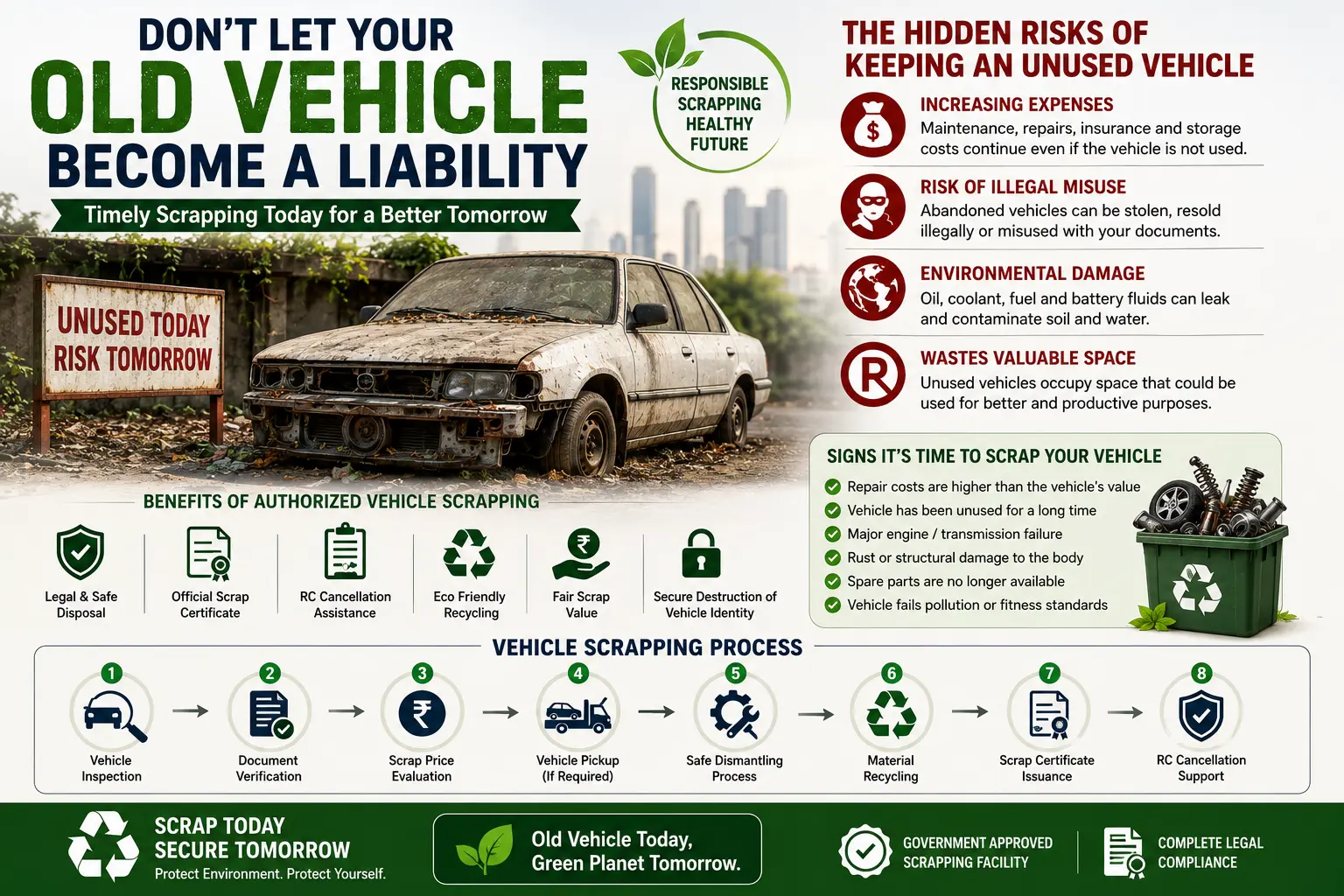
⚠ Signs It's Time to Scrap Your Vehicle

  • Repeated breakdowns
  • Very poor fuel efficiency
  • Excessive exhaust smoke
  • Major rust or structural damage
  • Failed vehicle fitness inspection
  • High repair bills every few months
  • Difficulty finding spare parts

πŸ’° Financial Benefits of Vehicle Scrapping

πŸ’΅ Better Value

Receive the best possible scrap value for your old vehicle.

πŸ›  Save on Repairs

Eliminate recurring maintenance and unexpected repair costs.

β›½ Fuel Savings

Upgrade to a more fuel-efficient vehicle and reduce fuel expenses.

πŸ“‹ How Authorized Vehicle Scrapping Works

1️⃣ Vehicle Inspection
2️⃣ Ownership Verification
3️⃣ Scrap Value Assessment
4️⃣ Safe Vehicle Dismantling
5️⃣ Recycling of Valuable Materials
6️⃣ Scrap Certificate Issued
7️⃣ RC Cancellation Assistance

β™» Valuable Parts That Can Be Recycled

  • βœ” Steel & Iron
  • βœ” Aluminum Components
  • βœ” Copper Wiring
  • βœ” Plastic Parts
  • βœ” Glass
  • βœ” Rubber Components
  • βœ” Alloy Wheels
  • βœ” Vehicle Batteries
  • βœ” Electronic Modules

πŸ›‘ Why Choose an Authorized Vehicle Scrapping Facility?

  • βœ” Government-approved scrapping process
  • βœ” Transparent vehicle valuation
  • βœ” Official Scrap Certificate
  • βœ” RC cancellation assistance
  • βœ” Safe disposal of hazardous materials
  • βœ” Environment-friendly recycling practices

❓ Frequently Asked Questions

Is scrapping better than repairing an old vehicle?

If repair costs are continuously increasing and the vehicle has little resale value, scrapping is usually the smarter financial decision.

Will I receive official documents after scrapping?

Yes. Authorized scrapping facilities issue a Scrap Certificate and assist with RC cancellation.

Can commercial vehicles also be scrapped?

Yes. Cars, motorcycles, trucks, buses, vans, and commercial vehicles can all be processed through authorized vehicle scrapping facilities.

🚘 Stop Spending on Repairs β€” Choose Smart Vehicle Scrapping

Turn your ageing vehicle into value with an authorized vehicle scrapping facility. Save money, avoid future repair costs, and ensure safe, legal, and eco-friendly recycling.

πŸ“ž Call Now πŸ’¬ WhatsApp

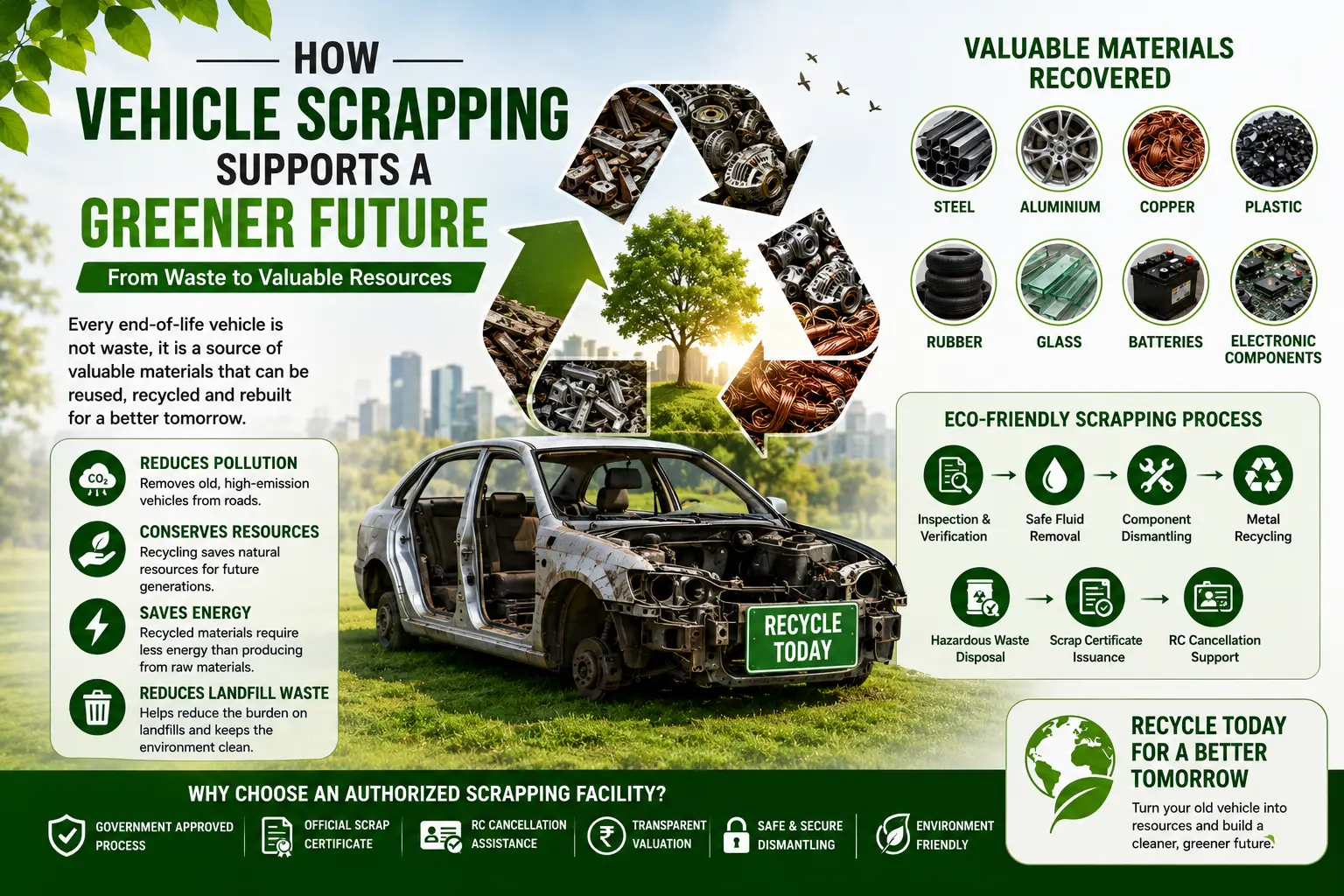
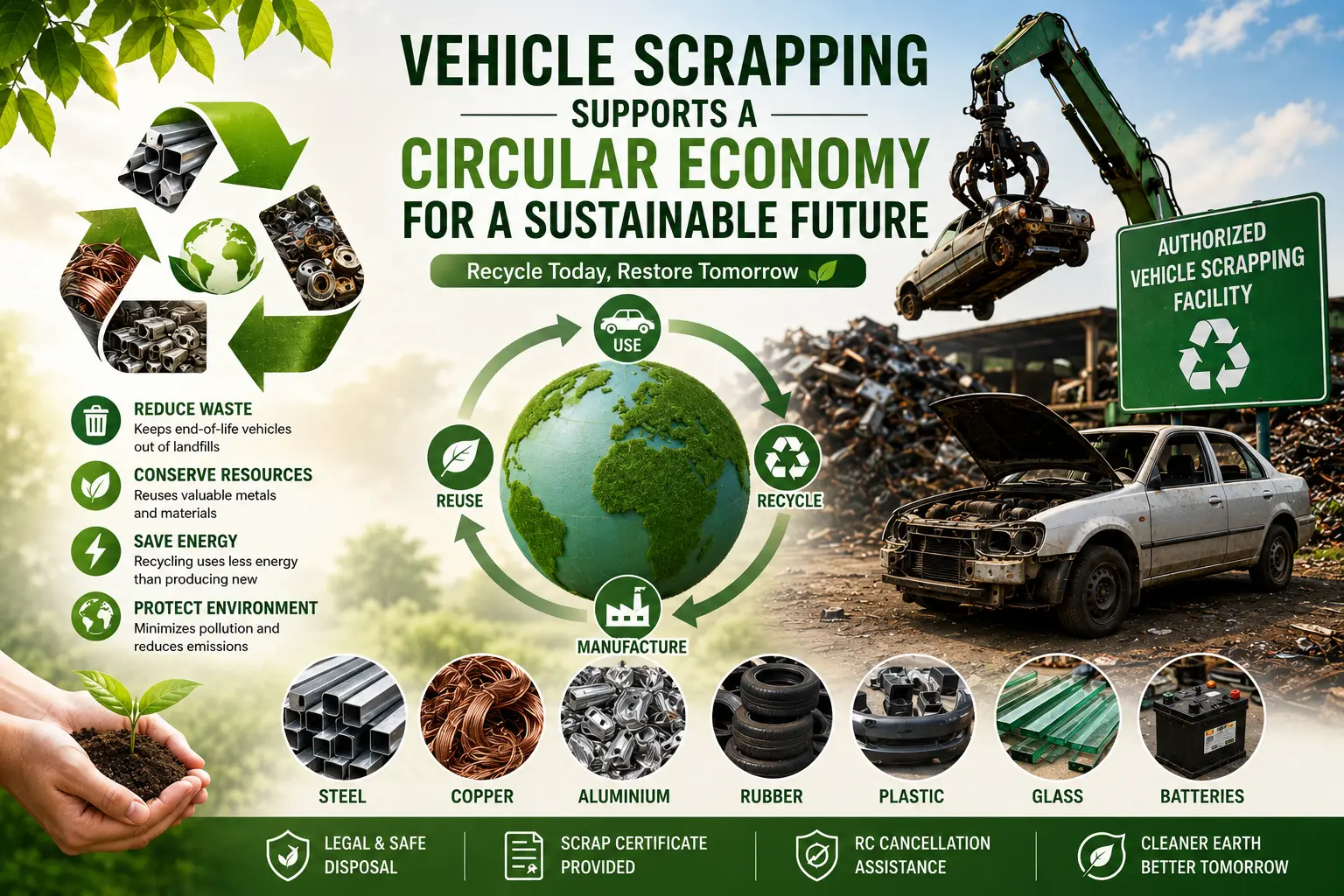
How Vehicle Scrapping Supports a Greener Future | The Environmental Benefits of Responsible Vehicle Recycling

Environmental Benefits of Vehicle Scrapping

How Vehicle Scrapping Supports a Greener Future | The Environmental Benefits of Responsible Vehicle Recycling

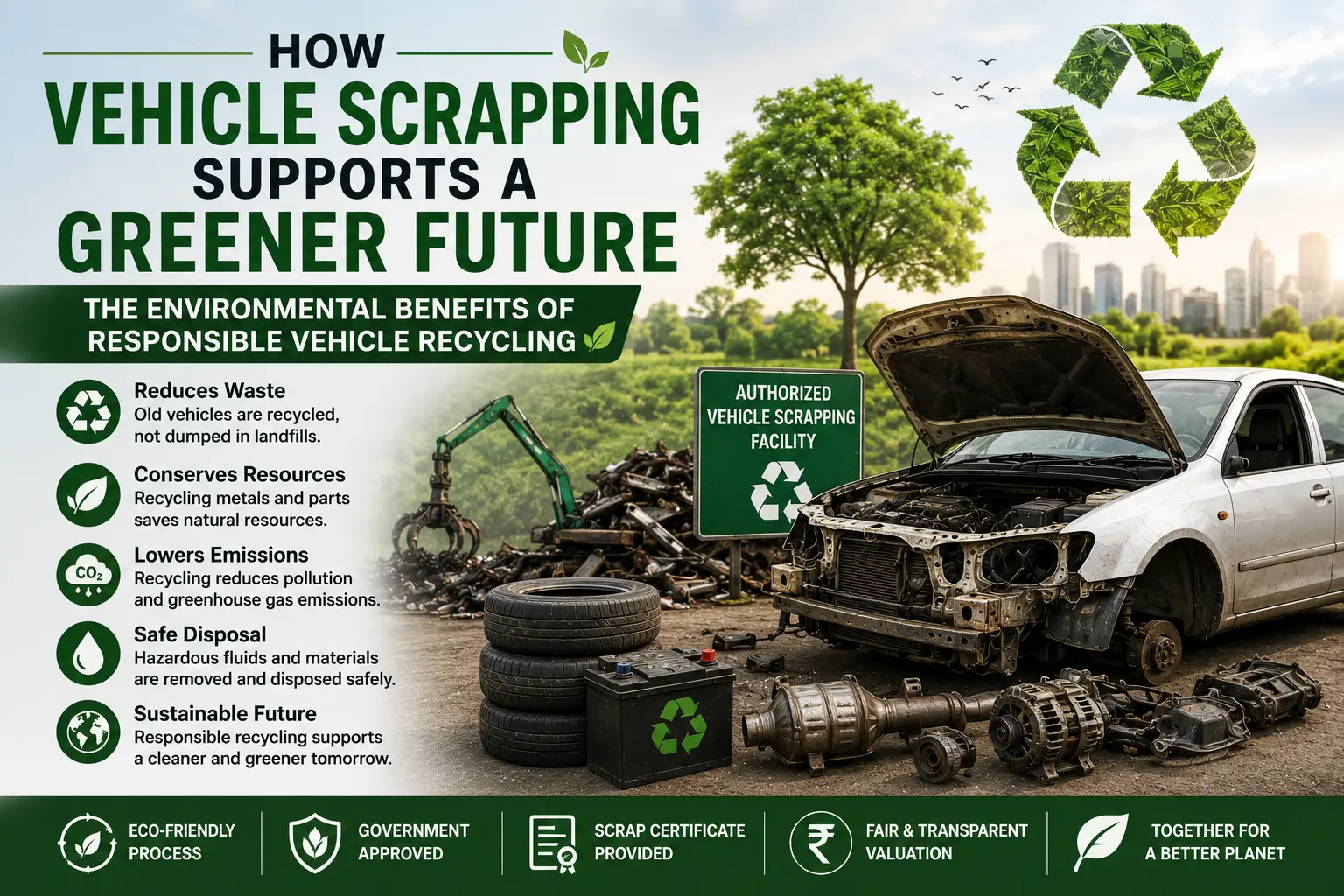
Every year, thousands of vehicles reach the end of their life. Instead of leaving old vehicles abandoned or selling them through unauthorized channels, responsible vehicle scrapping helps protect the environment while recovering valuable recyclable materials.

Authorized Vehicle Scrapping Facilities (AVSFs) use scientific dismantling methods that safely recycle vehicles, reduce pollution, and support a sustainable future. Choosing legal vehicle scrapping is not only beneficial for vehicle owners but also for society and the environment.

🌍 Why Old Vehicles Can Harm the Environment

As vehicles age, they become less fuel-efficient and produce higher emissions. Damaged or abandoned vehicles may leak hazardous fluids into the soil and groundwater, creating long-term environmental risks.

  • βœ” Increased air pollution
  • βœ” Soil contamination
  • βœ” Water pollution
  • βœ” Higher carbon emissions
  • βœ” Unsafe disposal of hazardous waste

β™» How Authorized Vehicle Scrapping Works

1️⃣ Vehicle Inspection
2️⃣ Ownership Verification
3️⃣ Safe Removal of Fuel, Oil & Battery
4️⃣ Scientific Dismantling
5️⃣ Recycling of Metal, Plastic & Glass
6️⃣ Scrap Certificate Issued
7️⃣ RC Cancellation Assistance

πŸ”§ Valuable Materials Recovered During Vehicle Recycling

πŸ”© Steel

Recycled steel is reused in manufacturing new products.

🟑 Aluminum

Lightweight aluminum is recovered and reused efficiently.

πŸ”Œ Copper

Copper wiring and electrical parts are valuable recyclable materials.

β™» Plastic & Rubber

Several plastic and rubber components can be recycled into new products.

🌱 Benefits of Responsible Vehicle Recycling

  • βœ” Reduces landfill waste
  • βœ” Conserves natural resources
  • βœ” Lowers industrial energy consumption
  • βœ” Reduces greenhouse gas emissions
  • βœ” Supports sustainable manufacturing
  • βœ” Ensures safe disposal of hazardous materials
  • βœ” Promotes a circular economy

πŸš— When Should You Consider Scrapping Your Vehicle?

  • βœ” Repair costs are higher than vehicle value.
  • βœ” Vehicle has failed fitness inspection.
  • βœ” Severe accident damage.
  • βœ” Long-term unused vehicle.
  • βœ” Heavy rust or structural damage.
  • βœ” Poor fuel efficiency and excessive emissions.

⭐ Why Choose an Authorized Vehicle Scrapping Facility?

πŸ“œ Legal Process

Government-approved scrapping procedures.

🌿 Eco-Friendly Recycling

Environmentally responsible dismantling and recycling.

πŸ“„ Complete Documentation

Scrap Certificate and RC cancellation support.

❓ Frequently Asked Questions

Can all vehicles be recycled?

Yes. Cars, motorcycles, trucks, buses, vans, and commercial vehicles can all be processed through authorized vehicle scrapping facilities.

Are all vehicle parts destroyed?

No. Reusable parts are recycled or refurbished, while hazardous materials are safely disposed of following environmental standards.

Why is responsible vehicle recycling important?

It reduces pollution, conserves natural resources, lowers carbon emissions, and supports sustainable manufacturing.

🌍 Build a Greener Future Through Responsible Vehicle Scrapping

Recycle your old vehicle through an authorized vehicle scrapping facility and contribute to environmental protection, sustainable recycling, and responsible resource conservation.

πŸ“ž Call Now πŸ’¬ WhatsApp

Vehicle Scrapping Myths vs Facts | Everything You Should Know Before Scrapping Your Vehicle

Vehicle Scrapping Myths vs Facts

Vehicle Scrapping Myths vs Facts | Everything You Should Know Before Scrapping Your Vehicle

Vehicle scrapping is surrounded by many misconceptions. Some people believe old vehicles have no value, while others think RC cancellation is optional or that authorized scrapping is expensive. In reality, government-approved vehicle scrapping facilities follow a safe, transparent, and eco-friendly process.

Let's separate the myths from the facts so you can make the right decision when scrapping your old car, bike, truck, or commercial vehicle.

❌ Myth 1: Selling to a Local Scrap Dealer Is the Same as Authorized Scrapping

βœ… Fact

Authorized Vehicle Scrapping Facilities (AVSFs) provide legal documentation, scientific dismantling, RC cancellation support, and an official Scrap Certificate, unlike many local scrap dealers.

❌ Myth 2: Old Vehicles Have No Scrap Value

βœ… Fact

Even old vehicles contain valuable recyclable materials such as steel, aluminum, copper, rubber, and plastic. Their scrap value depends on weight, condition, and market prices.

❌ Myth 3: RC Cancellation Is Optional

βœ… Fact

RC cancellation officially removes the vehicle from government records and protects the owner from future legal or ownership issues.

❌ Myth 4: Vehicle Scrapping Pollutes the Environment

βœ… Fact

Authorized facilities safely remove engine oil, batteries, fuel, brake fluid, and other hazardous materials before recycling the vehicle, reducing environmental pollution.

❌ Myth 5: Every Vehicle Gets the Same Scrap Price

βœ… Fact

Scrap value differs based on vehicle weight, model, metal content, engine condition, and current market rates.

❌ Myth 6: The Scrapping Process Takes Too Long

βœ… Fact

With complete documents, authorized facilities complete inspection, valuation, dismantling, Scrap Certificate generation, and RC cancellation support efficiently.

⭐ Benefits of Choosing an Authorized Vehicle Scrapping Facility

πŸ“„ Legal Documentation

Complete paperwork with proper verification.

β™» Eco-Friendly Recycling

Scientific dismantling minimizes environmental impact.

πŸ’° Fair Scrap Value

Transparent valuation based on current market conditions.

πŸ“‹ Standard Vehicle Scrapping Process

1️⃣ Vehicle Inspection
2️⃣ Document Verification
3️⃣ Scrap Value Estimation
4️⃣ Vehicle Pickup (If Required)
5️⃣ Scientific Dismantling
6️⃣ Scrap Certificate
7️⃣ RC Cancellation Assistance

❓ Frequently Asked Questions

Can I scrap a vehicle without RC?

Some cases may require additional verification, but complete documents make the process easier and faster.

Does vehicle age alone decide the scrap price?

No. Weight, metal content, engine condition, and current scrap market rates all influence the final value.

Why should I choose an authorized scrapping facility?

Authorized facilities provide legal scrapping, RC cancellation support, official Scrap Certificates, and environmentally responsible recycling.

πŸš— Choose Facts, Choose Legal Vehicle Scrapping

Protect yourself from myths and misinformation. Scrap your old vehicle through an authorized vehicle scrapping facility and enjoy a safe, legal, and environmentally responsible process.

πŸ“ž Call Now πŸ’¬ WhatsApp

How to Prepare Your Vehicle Before Scrapping | Complete Owner’s Checklist

How to Prepare Your Vehicle Before Scrapping

How to Prepare Your Vehicle Before Scrapping | Complete Owner's Checklist

Scrapping an old vehicle is more than simply handing over the keys. Whether you own a car, bike, truck, or commercial vehicle, preparing it before scrapping helps ensure a smooth process, protects your personal information, and allows you to receive the best possible scrap value.

This guide explains the important steps every vehicle owner should complete before visiting an authorized vehicle scrapping facility.

πŸ“‘ 1. Collect All Required Documents

Before scheduling vehicle scrapping, keep all necessary documents ready for verification.

  • βœ” Original Registration Certificate (RC)
  • βœ” Aadhaar Card
  • βœ” PAN Card
  • βœ” Address Proof
  • βœ” Vehicle Insurance (if available)
  • βœ” Pollution Certificate (if available)

πŸŽ’ 2. Remove Personal Belongings

Carefully inspect your vehicle and remove all personal belongings before handing it over.

βœ” Dashboard
βœ” Glove Box
βœ” Door Pockets
βœ” Boot Area
βœ” Under the Seats
βœ” Tool Kit Storage

πŸ“‘ 3. Remove FASTag & Digital Accessories

Before scrapping, deactivate your FASTag and remove electronic accessories connected to the vehicle.

🏷 FASTag

Close or deactivate your FASTag account to avoid future toll deductions.

πŸ“· Electronics

Remove dash cameras, GPS trackers, Bluetooth devices and chargers.

πŸ”‘ Spare Keys

Keep all spare keys together before submitting the vehicle.

πŸ’° 4. Verify Loan & Legal Status

Ensure there are no pending financial or legal issues associated with your vehicle before scrapping.

  • βœ” Vehicle Loan Clearance
  • βœ” Pending Traffic Challans
  • βœ” Outstanding Taxes
  • βœ” Ownership Verification

πŸ’΅ 5. Get Your Vehicle Evaluated

Scrap value varies depending on vehicle weight, condition, metal content, engine status and current market rates. Comparing quotations from authorized facilities helps you receive fair pricing.

πŸ“‹ Vehicle Scrapping Process

1️⃣ Vehicle Inspection
2️⃣ Document Verification
3️⃣ Scrap Value Approval
4️⃣ Vehicle Pickup (If Required)
5️⃣ Safe Dismantling
6️⃣ RC Cancellation
7️⃣ Scrap Certificate Issued

⭐ Benefits of Choosing an Authorized Scrapping Facility

  • βœ” Legal Vehicle Disposal
  • βœ” Official Scrap Certificate
  • βœ” Proper RC Cancellation
  • βœ” Transparent Pricing
  • βœ” Environment-Friendly Recycling
  • βœ” Safe Documentation Process

⚠ Common Mistakes to Avoid

  • ❌ Forgetting personal belongings
  • ❌ Missing important documents
  • ❌ Ignoring FASTag deactivation
  • ❌ Choosing unauthorized scrap dealers
  • ❌ Forgetting RC cancellation
  • ❌ Not collecting the Scrap Certificate

❓ Frequently Asked Questions

Should I remove FASTag before scrapping my vehicle?

Yes. Deactivating FASTag prevents future toll deductions and closes your linked account safely.

Can I scrap a financed vehicle?

Generally, the vehicle loan should be cleared before the scrapping process can be completed.

Will I receive a Scrap Certificate?

Yes. Authorized vehicle scrapping facilities provide an official Scrap Certificate after successful dismantling.

🚘 Prepare Your Vehicle the Right Way Before Scrapping

Complete the essential checklist, protect your personal information, and enjoy a smooth, legal, and hassle-free vehicle scrapping experience with an authorized scrapping facility.

πŸ“ž Call Now πŸ’¬ WhatsApp

What Happens to Your Vehicle After It Is Scrapped? | The Complete Recycling Journey

What Happens to Your Vehicle After It Is Scrapped?

What Happens to Your Vehicle After It Is Scrapped? | The Complete Recycling Journey

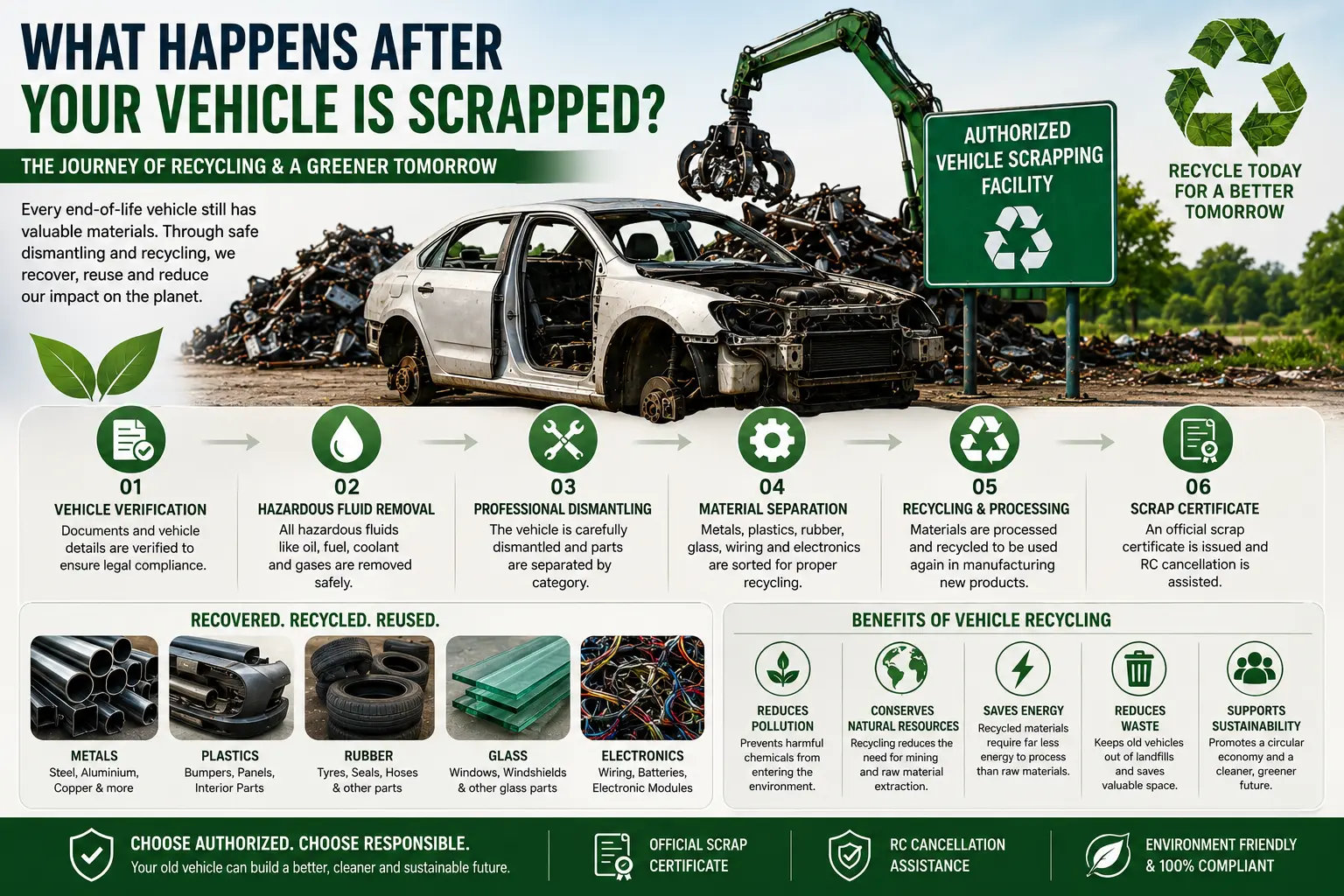
Have you ever wondered what happens after your old car, bike, truck, or commercial vehicle is handed over to a vehicle scrapping facility? Many people assume the vehicle is simply crushed and discarded, but the reality is very different.

Authorized vehicle scrapping follows a systematic recycling process that helps recover valuable materials, safely dispose of hazardous substances, and reduce environmental waste. Every stage is carefully managed to maximize recycling efficiency.

πŸš— Step 1: Vehicle Inspection

Before dismantling begins, the vehicle undergoes a complete inspection to verify ownership and identify reusable components.

  • βœ” Vehicle identity verification
  • βœ” Registration document check
  • βœ” Engine & chassis number verification
  • βœ” Overall condition assessment

⚠ Step 2: Safe Removal of Hazardous Materials

Hazardous fluids and materials are removed carefully to prevent environmental contamination before dismantling begins.

βœ” Engine Oil
βœ” Brake Fluid
βœ” Coolant
βœ” Fuel
βœ” Vehicle Battery
βœ” Air Conditioning Gas

πŸ”§ Step 3: Recovery of Reusable Parts

Many vehicle components remain usable even after the vehicle reaches the end of its life. These parts are carefully removed and inspected.

βš™ Engine Components

Alternator, starter motor and other reusable mechanical parts.

🚘 Exterior Parts

Doors, mirrors, lights, alloy wheels and body panels.

πŸͺ‘ Interior Parts

Seats, dashboard components and interior accessories.

🏭 Step 4: Vehicle Dismantling

Once reusable components are removed, the remaining vehicle is dismantled using professional equipment. Different materials are separated for recycling.

  • βœ” Steel
  • βœ” Aluminum
  • βœ” Copper
  • βœ” Glass
  • βœ” Plastic
  • βœ” Rubber

β™» Step 5: Recycling Valuable Materials

Recovered metals are sent to recycling plants where they are processed into raw materials for manufacturing new products.

  • βœ” New automobiles
  • βœ” Construction materials
  • βœ” Industrial equipment
  • βœ” Household appliances

🌍 Step 6: Environmentally Safe Waste Disposal

Non-recyclable materials and hazardous waste are disposed of safely according to environmental standards, reducing pollution and protecting natural resources.

⭐ Benefits of Professional Vehicle Recycling

  • βœ” Conserves natural resources
  • βœ” Reduces landfill waste
  • βœ” Supports sustainable manufacturing
  • βœ” Lowers industrial energy consumption
  • βœ” Encourages responsible recycling

πŸ… Why Choose an Authorized Vehicle Scrapping Facility?

Authorized scrapping facilities follow legal procedures, maintain proper records, ensure environmentally responsible dismantling, and provide complete transparency throughout the recycling process.

❓ Frequently Asked Questions

Can vehicle parts be reused after scrapping?

Yes. Many components that remain in good condition can be refurbished and reused after proper inspection.

What materials are recycled?

Steel, aluminum, copper, plastic, rubber, and glass are commonly recovered and recycled.

Why is authorized scrapping important?

Authorized facilities ensure safe recycling, proper documentation, and environmentally responsible disposal practices.

🚘 Give Your Old Vehicle a Responsible New Beginning

Professional vehicle scrapping is more than disposalβ€”it's a complete recycling journey that helps recover valuable materials, protect the environment, and support sustainable development.

πŸ“ž Call Now πŸ’¬ WhatsApp Now
What Happens to Your Vehicle After It Is Scrapped?

What Happens to Your Vehicle After It Is Scrapped? | The Complete Recycling Journey

Have you ever wondered what happens after your old car, bike, truck, or commercial vehicle is handed over to a vehicle scrapping facility? Many people assume the vehicle is simply crushed and discarded, but the reality is very different.

Authorized vehicle scrapping follows a systematic recycling process that helps recover valuable materials, safely dispose of hazardous substances, and reduce environmental waste. Every stage is carefully managed to maximize recycling efficiency.

πŸš— Step 1: Vehicle Inspection

Before dismantling begins, the vehicle undergoes a complete inspection to verify ownership and identify reusable components.

  • βœ” Vehicle identity verification
  • βœ” Registration document check
  • βœ” Engine & chassis number verification
  • βœ” Overall condition assessment

⚠ Step 2: Safe Removal of Hazardous Materials

Hazardous fluids and materials are removed carefully to prevent environmental contamination before dismantling begins.

βœ” Engine Oil
βœ” Brake Fluid
βœ” Coolant
βœ” Fuel
βœ” Vehicle Battery
βœ” Air Conditioning Gas

πŸ”§ Step 3: Recovery of Reusable Parts

Many vehicle components remain usable even after the vehicle reaches the end of its life. These parts are carefully removed and inspected.

βš™ Engine Components

Alternator, starter motor and other reusable mechanical parts.

🚘 Exterior Parts

Doors, mirrors, lights, alloy wheels and body panels.

πŸͺ‘ Interior Parts

Seats, dashboard components and interior accessories.

🏭 Step 4: Vehicle Dismantling

Once reusable components are removed, the remaining vehicle is dismantled using professional equipment. Different materials are separated for recycling.

  • βœ” Steel
  • βœ” Aluminum
  • βœ” Copper
  • βœ” Glass
  • βœ” Plastic
  • βœ” Rubber

β™» Step 5: Recycling Valuable Materials

Recovered metals are sent to recycling plants where they are processed into raw materials for manufacturing new products.

  • βœ” New automobiles
  • βœ” Construction materials
  • βœ” Industrial equipment
  • βœ” Household appliances

🌍 Step 6: Environmentally Safe Waste Disposal

Non-recyclable materials and hazardous waste are disposed of safely according to environmental standards, reducing pollution and protecting natural resources.

⭐ Benefits of Professional Vehicle Recycling

  • βœ” Conserves natural resources
  • βœ” Reduces landfill waste
  • βœ” Supports sustainable manufacturing
  • βœ” Lowers industrial energy consumption
  • βœ” Encourages responsible recycling

πŸ… Why Choose an Authorized Vehicle Scrapping Facility?

Authorized scrapping facilities follow legal procedures, maintain proper records, ensure environmentally responsible dismantling, and provide complete transparency throughout the recycling process.

❓ Frequently Asked Questions

Can vehicle parts be reused after scrapping?

Yes. Many components that remain in good condition can be refurbished and reused after proper inspection.

What materials are recycled?

Steel, aluminum, copper, plastic, rubber, and glass are commonly recovered and recycled.

Why is authorized scrapping important?

Authorized facilities ensure safe recycling, proper documentation, and environmentally responsible disposal practices.

🚘 Give Your Old Vehicle a Responsible New Beginning

Professional vehicle scrapping is more than disposalβ€”it's a complete recycling journey that helps recover valuable materials, protect the environment, and support sustainable development.

πŸ“ž Call Now πŸ’¬ WhatsApp Now

Signs That It’s Time to Scrap Your Vehicle Instead of Repairing It

Signs It's Time to Scrap Your Vehicle

Signs It's Time to Scrap Your Vehicle Instead of Repairing It

Every vehicle has a lifespan, and there comes a point when repairing it repeatedly is no longer a smart investment. While regular maintenance can extend a vehicle's life, excessive repair costs, declining performance, and safety concerns are strong indicators that it may be time to consider vehicle scrapping.

Knowing these warning signs can help you save money, avoid unexpected breakdowns, and make a better long-term decision.

πŸ”§ Repair Costs Keep Increasing

If every visit to the workshop results in another expensive repair, your vehicle may have reached the end of its useful life.

  • βœ” Engine overhaul
  • βœ” Gearbox replacement
  • βœ” Suspension repairs
  • βœ” Electrical failures
  • βœ” Repeated servicing

πŸš— Frequent Breakdowns

A dependable vehicle should perform consistently. If it regularly breaks down, reliability becomes a major concern.

Common warning signs include:

βœ” Engine overheating
βœ” Starting problems
βœ” Brake issues
βœ” Clutch failure
βœ” Battery or electrical problems

⚠ Excessive Rust & Structural Damage

Rust on important structural components can reduce vehicle strength and compromise passenger safety. Severe corrosion is often expensive to repair.

β›½ Poor Fuel Efficiency

Older vehicles usually consume more fuel because of engine wear and outdated technology. Higher fuel expenses can significantly increase your ownership cost.

πŸ”© Spare Parts Are Hard to Find

As vehicles age, genuine spare parts become difficult to source, making repairs slower and more expensive.

πŸ›‘ Outdated Safety Features

Older vehicles may not include modern safety systems that improve driver and passenger protection.

  • βœ” ABS Braking
  • βœ” Airbags
  • βœ” Electronic Stability Control
  • βœ” Improved Crash Protection

⭐ Benefits of Scrapping an Old Vehicle

πŸ’° Save Money

Stop spending on repeated repairs and maintenance.

β™» Responsible Recycling

Valuable materials are recovered through professional recycling.

🚘 Better Safety

Replace unsafe vehicles with newer and safer transportation.

πŸ“‹ Before You Scrap Your Vehicle

  • βœ” Remove personal belongings
  • βœ” Keep all important documents ready
  • βœ” Compare scrap value quotations
  • βœ” Choose an authorized scrapping facility
  • βœ” Keep copies of all paperwork

❓ Frequently Asked Questions

How do I know my vehicle should be scrapped?

If repair costs are too high, breakdowns are frequent, and safety has become a concern, scrapping may be the better option.

Can an old damaged vehicle still have value?

Yes. Even damaged or non-running vehicles usually have scrap value based on recyclable materials.

Why use an authorized scrapping facility?

Authorized facilities ensure proper documentation, legal compliance, and environmentally responsible recycling.

πŸš— Is Your Vehicle Costing More Than It's Worth?

If your vehicle has become expensive to maintain, now may be the right time to choose professional vehicle scrapping. Get expert assistance and make a smarter decision today.

πŸ“ž Call Now πŸ’¬ WhatsApp Now

How Vehicle Scrapping Helps Protect the Environment

How Vehicle Scrapping Helps The Environment

How Vehicle Scrapping Helps Protect The Environment

Most people think vehicle scrapping is only about getting rid of an old car, bike, or commercial vehicle. However, responsible vehicle scrapping plays an important role in protecting the environment and supporting sustainable recycling practices.

Modern authorized vehicle scrapping facilities recover valuable materials, safely dispose of hazardous substances, and help reduce pollution through environmentally responsible recycling processes.

🌍 Why Old Vehicles Can Harm The Environment

Aging vehicles often become less fuel-efficient and may release higher emissions compared to newer models. Over time, worn-out components can also increase environmental risks.

  • βœ” Increased air pollution
  • βœ” Higher fuel consumption
  • βœ” Oil and coolant leakage
  • βœ” Increased carbon emissions
  • βœ” Unsafe disposal risks

β™» Vehicle Recycling Reduces Waste

A large percentage of vehicle materials can be recovered and reused. This helps reduce landfill waste and supports a circular recycling economy.

πŸ”© Steel

Recycled steel can be reused in manufacturing industries.

πŸ”§ Aluminum

Aluminum recycling saves significant energy resources.

β™» Plastic & Rubber

Many vehicle components can be processed and reused.

🌱 Conservation Of Natural Resources

Recycling vehicle materials reduces the need for extracting raw resources from the environment. This helps preserve natural ecosystems and reduces industrial impact.

  • βœ” Less mining activity
  • βœ” Reduced energy consumption
  • βœ” Lower industrial pollution
  • βœ” Better resource management

🌀 Reduction In Carbon Footprint

Recycled metals require significantly less energy compared to producing metals from raw materials. As a result:

βœ” Energy consumption decreases
βœ” Carbon emissions reduce
βœ” Manufacturing becomes more sustainable

⚠ Safe Disposal Of Hazardous Materials

Vehicles contain substances that require professional handling to prevent environmental contamination.

  • βœ” Engine Oil
  • βœ” Brake Fluid
  • βœ” Coolants
  • βœ” Batteries
  • βœ” Air Conditioning Gases

πŸ™ Benefits For Communities

Responsible vehicle recycling contributes to cleaner cities, safer roads, and improved environmental quality for future generations.

  • βœ” Reduced abandoned vehicles
  • βœ” Cleaner surroundings
  • βœ” Improved public safety
  • βœ” More recycling opportunities
  • βœ” Sustainable development support

⭐ Why Choose An Authorized Vehicle Scrapping Facility?

  • βœ” Environmentally responsible recycling
  • βœ” Safe dismantling procedures
  • βœ” Proper hazardous waste management
  • βœ” Professional documentation support
  • βœ” Legal and transparent process

❓ Frequently Asked Questions

Can vehicle parts be recycled?

Yes, many vehicle materials including steel, aluminum, plastic, and glass can be recycled and reused.

Does recycling help reduce pollution?

Yes, recycling reduces waste, conserves resources, and lowers overall environmental impact.

Why should I choose an authorized scrapping facility?

Authorized facilities follow proper recycling and environmental safety standards.

🌱 Support A Cleaner Future Through Responsible Vehicle Scrapping

Scrap your old vehicle responsibly and contribute to environmental sustainability through safe and professional recycling practices.

πŸ“ž Call Now πŸ’¬ WhatsApp Now
```

7 Common Mistakes People Make Before Scrapping Their Vehicle

Common Mistakes Before Vehicle Scrapping

7 Common Mistakes People Make Before Scrapping Their Vehicle

Scrapping an old vehicle is often the smartest decision when repair costs become too high or the vehicle is no longer roadworthy. However, many vehicle owners unknowingly make mistakes that can reduce their scrap value or create unnecessary complications.

Understanding these common mistakes can help ensure a smooth, legal, and hassle-free vehicle scrapping experience.

πŸ“„ Mistake #1: Ignoring Important Documents

Many vehicle owners begin the scrapping process without organizing their documents, which can delay verification and processing.

  • βœ” Registration Certificate (RC)
  • βœ” Aadhaar Card
  • βœ” PAN Card
  • βœ” Owner ID Proof

⚠️ Mistake #2: Choosing Unauthorized Scrap Dealers

Unauthorized scrap dealers may not provide proper documentation or environmentally responsible disposal methods.

βœ” No proper documentation
βœ” No scrap certificate support
βœ” Potential misuse risks
βœ” Unregulated dismantling process

πŸ’° Mistake #3: Accepting the First Scrap Offer

Vehicle owners often accept the first quotation they receive without understanding how scrap value is calculated.

  • βœ” Vehicle Weight
  • βœ” Metal Content
  • βœ” Vehicle Condition
  • βœ” Current Scrap Market Rates

πŸŽ’ Mistake #4: Leaving Personal Belongings Behind

Before handing over your vehicle, thoroughly inspect every compartment for personal items.

🧰 Tool Kits

Check all storage spaces before scrapping.

πŸ“‘ Documents

Remove insurance papers and personal records.

πŸ”Œ Accessories

Don't forget chargers, gadgets, and electronics.

πŸ•’ Mistake #5: Delaying the Decision

Keeping an unused vehicle parked for years can reduce its value and increase deterioration.

  • βœ” Rust formation
  • βœ” Lower scrap value
  • βœ” Storage issues
  • βœ” Additional maintenance expenses

🌍 Mistake #6: Ignoring Environmental Responsibility

Vehicles contain fluids and materials that require proper recycling and disposal.

β™» Engine Oil
β™» Brake Fluid
β™» Batteries
β™» Coolants

🚘 Mistake #7: Not Understanding Scrapping Benefits

Vehicle scrapping is not only about disposal. It also supports recycling, legal compliance, and resource conservation.

⭐ Benefits of Authorized Vehicle Scrapping

  • βœ” Proper documentation support
  • βœ” Transparent valuation process
  • βœ” Responsible recycling
  • βœ” Environment-friendly dismantling
  • βœ” Safe vehicle disposal
  • βœ” Professional handling

❓ Frequently Asked Questions

Can a non-running vehicle be scrapped?

Yes, non-operational vehicles can generally be accepted by authorized scrapping facilities.

Does every vehicle have scrap value?

Most vehicles retain value based on recyclable materials and overall weight.

Why should I choose an authorized facility?

Authorized facilities follow legal procedures and environmentally responsible recycling practices.

πŸš€ Ready to Scrap Your Vehicle the Right Way?

Avoid costly mistakes and ensure a smooth vehicle scrapping process with complete support and transparent service.

πŸ“ž Call Now πŸ’¬ WhatsApp Now
```

The Hidden Costs of Keeping an Old Vehicle: Why Scrapping Makes Financial Sense

Hidden Costs of Keeping an Old Vehicle

The Hidden Costs of Keeping an Old Vehicle: Why Scrapping Makes Financial Sense

Many vehicle owners continue using old cars, bikes, and commercial vehicles because they believe replacing them would be expensive. However, aging vehicles often create hidden costs that gradually increase over time.

Frequent repairs, poor fuel efficiency, safety concerns, and declining resale value can turn an old vehicle into a financial burden. In many cases, authorized vehicle scrapping becomes a smarter and more economical choice.

πŸ“‰ Understanding Vehicle Depreciation

Every vehicle loses value over time. While depreciation is highest during the first few years, older vehicles continue to decline in market value while their maintenance costs keep increasing.

βœ” Lower resale value
βœ” Increasing repair expenses
βœ” Expensive spare parts
βœ” Reduced reliability

πŸ”§ Rising Maintenance Costs

As vehicles age, major components start wearing out. Owners often spend significant amounts on repairs just to keep the vehicle operational.

βš™ Engine Repairs

Major engine repairs can become extremely expensive as vehicles age.

πŸ”‹ Electrical Issues

Wiring failures, battery problems and electronic faults become common.

πŸ›ž Suspension Wear

Suspension and steering systems often require costly replacements.

β›½ Fuel Efficiency Declines with Age

Older vehicles generally consume more fuel than newer models. Engine wear and outdated technology reduce efficiency and increase operating costs over time.

  • βœ” Higher monthly fuel expenses
  • βœ” Reduced mileage performance
  • βœ” Increased engine strain
  • βœ” Higher long-term operating costs

πŸ›‘ Safety Risks of Older Vehicles

Vehicle safety standards have improved dramatically over the years. Older vehicles may lack important safety technologies available in modern vehicles.

  • βœ” Weaker structural protection
  • βœ” Outdated braking systems
  • βœ” Reduced crash protection
  • βœ” Increased risk of breakdowns

🌍 Environmental Impact of Old Vehicles

Older vehicles often produce higher emissions and consume more resources. Vehicle scrapping helps recover valuable materials and reduces environmental damage.

β™» Metal Recycling
β™» Pollution Reduction
β™» Safe Disposal of Fluids
β™» Sustainable Resource Recovery

πŸ“‹ How Authorized Vehicle Scrapping Works

1️⃣ Vehicle Assessment
2️⃣ Documentation Verification
3️⃣ Scrap Value Evaluation
4️⃣ Safe Dismantling Process
5️⃣ Recycling of Components
6️⃣ Scrap Certificate Issuance

⭐ Benefits of Vehicle Scrapping

  • βœ” Recover value from an aging vehicle
  • βœ” Eliminate recurring repair costs
  • βœ” Improve road safety
  • βœ” Support environmental sustainability
  • βœ” Reduce fuel expenses
  • βœ” Ensure responsible vehicle disposal

❓ Frequently Asked Questions

Can a non-running vehicle be scrapped?

Yes, authorized scrapping facilities accept non-operational vehicles.

Does an accident-damaged vehicle qualify for scrapping?

Yes, heavily damaged vehicles can be processed through authorized scrapping facilities.

Why choose an authorized scrapping facility?

Authorized facilities ensure legal compliance, proper documentation, and environmentally responsible recycling.

πŸš€ Time to Let Go of Your Old Vehicle?

Get professional vehicle scrapping services, complete documentation support, and the best possible scrap value for your old car, bike, or commercial vehicle.

πŸ“ž Call Now πŸ’¬ WhatsApp Now