

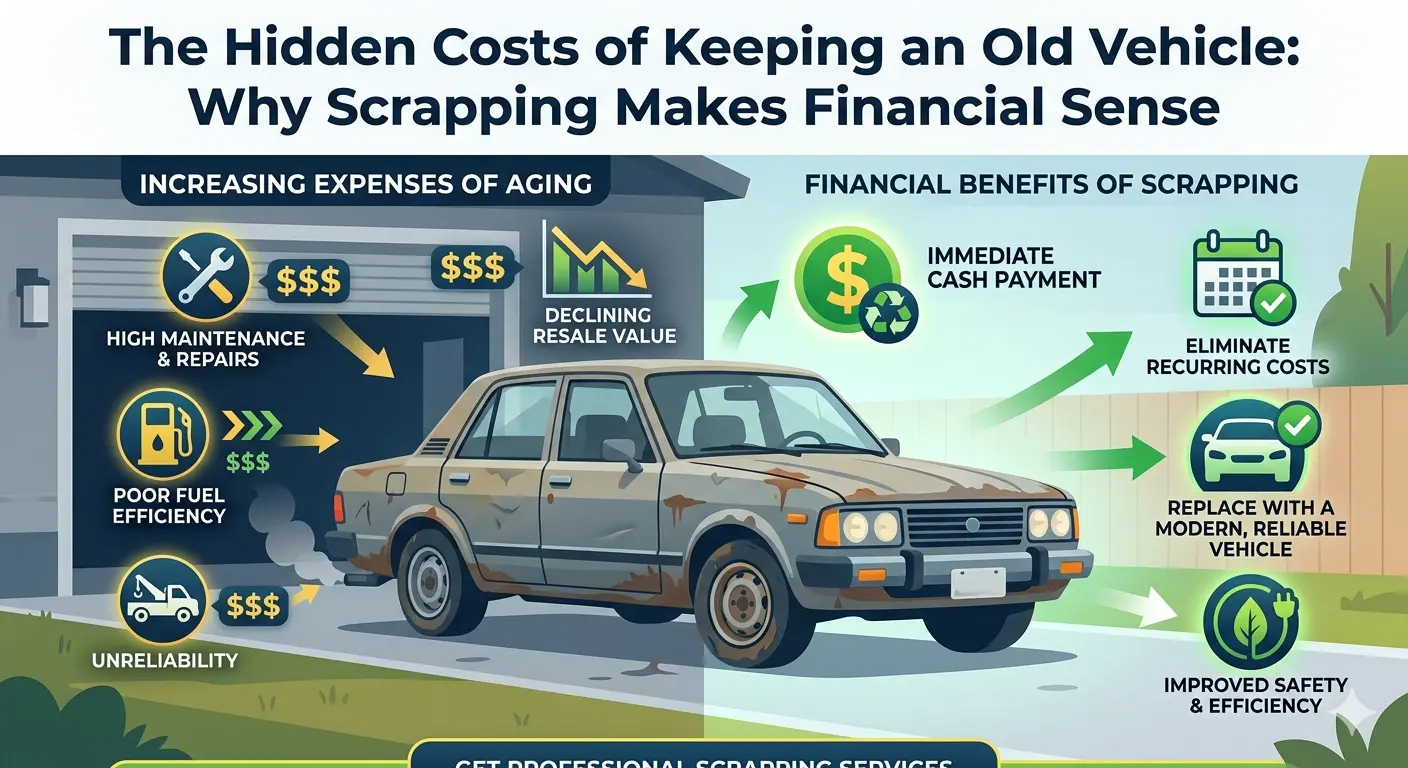
The Hidden Costs of Keeping an Old Vehicle: Why Scrapping Makes Financial Sense
Many vehicle owners continue using old cars, bikes, and commercial vehicles because they believe replacing them would be expensive. However, aging vehicles often create hidden costs that gradually increase over time.
Frequent repairs, poor fuel efficiency, safety concerns, and declining resale value can turn an old vehicle into a financial burden. In many cases, authorized vehicle scrapping becomes a smarter and more economical choice.
📉 Understanding Vehicle Depreciation
Every vehicle loses value over time. While depreciation is highest during the first few years, older vehicles continue to decline in market value while their maintenance costs keep increasing.
✔ Lower resale value
✔ Increasing repair expenses
✔ Expensive spare parts
✔ Reduced reliability
🔧 Rising Maintenance Costs
As vehicles age, major components start wearing out. Owners often spend significant amounts on repairs just to keep the vehicle operational.
⚙ Engine Repairs
Major engine repairs can become extremely expensive as vehicles age.
🔋 Electrical Issues
Wiring failures, battery problems and electronic faults become common.
🛞 Suspension Wear
Suspension and steering systems often require costly replacements.
⛽ Fuel Efficiency Declines with Age
Older vehicles generally consume more fuel than newer models. Engine wear and outdated technology reduce efficiency and increase operating costs over time.
- ✔ Higher monthly fuel expenses
- ✔ Reduced mileage performance
- ✔ Increased engine strain
- ✔ Higher long-term operating costs
🛡 Safety Risks of Older Vehicles
Vehicle safety standards have improved dramatically over the years. Older vehicles may lack important safety technologies available in modern vehicles.
- ✔ Weaker structural protection
- ✔ Outdated braking systems
- ✔ Reduced crash protection
- ✔ Increased risk of breakdowns
🌍 Environmental Impact of Old Vehicles
Older vehicles often produce higher emissions and consume more resources. Vehicle scrapping helps recover valuable materials and reduces environmental damage.
♻ Metal Recycling
♻ Pollution Reduction
♻ Safe Disposal of Fluids
♻ Sustainable Resource Recovery
📋 How Authorized Vehicle Scrapping Works
1️⃣ Vehicle Assessment
2️⃣ Documentation Verification
3️⃣ Scrap Value Evaluation
4️⃣ Safe Dismantling Process
5️⃣ Recycling of Components
6️⃣ Scrap Certificate Issuance
⭐ Benefits of Vehicle Scrapping
- ✔ Recover value from an aging vehicle
- ✔ Eliminate recurring repair costs
- ✔ Improve road safety
- ✔ Support environmental sustainability
- ✔ Reduce fuel expenses
- ✔ Ensure responsible vehicle disposal
❓ Frequently Asked Questions
Can a non-running vehicle be scrapped?
Yes, authorized scrapping facilities accept non-operational vehicles.
Does an accident-damaged vehicle qualify for scrapping?
Yes, heavily damaged vehicles can be processed through authorized scrapping facilities.
Why choose an authorized scrapping facility?
Authorized facilities ensure legal compliance, proper documentation, and environmentally responsible recycling.
🚀 Time to Let Go of Your Old Vehicle?
Get professional vehicle scrapping services, complete documentation support, and the best possible scrap value for your old car, bike, or commercial vehicle.
📞 Call Now 💬 WhatsApp Now
Add a Comment