

Introduction
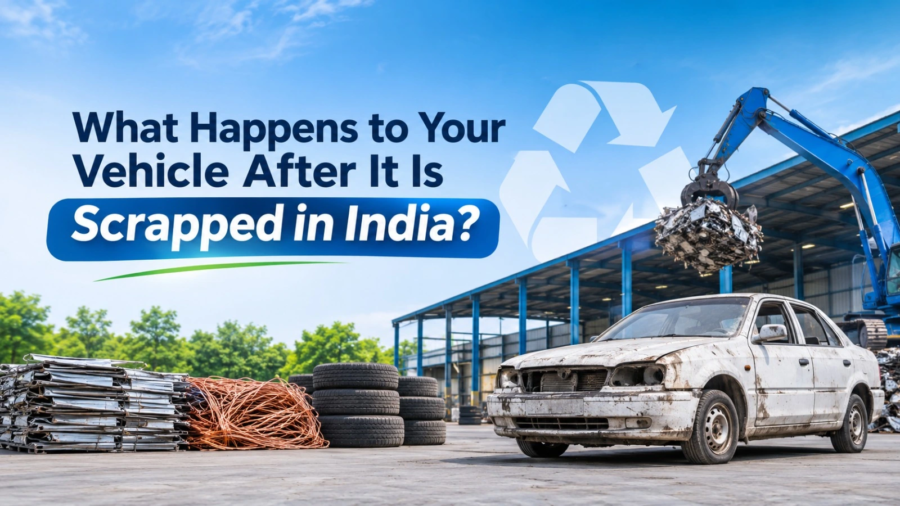
Have you ever wondered what happens to your vehicle after it is handed over for scrapping? Vehicle scrapping is not simply about dismantling an old car and selling its metal. It involves a structured process of inspection, depollution, dismantling, material recovery and recycling.
In India, Registered Vehicle Scrapping Facilities (RVSFs) handle eligible end-of-life vehicles through prescribed procedures. These facilities help recover useful materials and ensure that hazardous waste is managed responsibly.
Let’s understand what happens to your vehicle after it reaches a registered scrapping facility.
1. Vehicle Inspection and Verification
The first stage begins when you hand over your vehicle to a Registered Vehicle Scrapping Facility. The facility checks the vehicle’s identity and verifies the required documents before accepting it for further processing.
Details such as the registration number, chassis number and ownership documents are checked as applicable. After completing the required formalities, the facility issues a Certificate of Deposit (CoD).
This certificate serves as proof that the vehicle has been deposited with the facility for further treatment.
2. Depollution: Removal of Hazardous Materials
Before dismantling, the vehicle undergoes depollution. This is an important step because old vehicles contain liquids and components that can harm the environment if handled improperly.
During this stage, fuel, engine oil, coolant, brake fluid and other vehicle fluids are collected. Batteries and air-conditioning refrigerants are also handled through appropriate procedures.
Proper depollution helps prevent soil and water contamination and makes the vehicle safer for dismantling.
3. Vehicle Dismantling
After depollution, the vehicle moves to the dismantling stage. Trained workers separate different components using suitable tools and equipment.
Parts such as the engine, gearbox, tyres, seats, doors, bumpers, wiring, glass and plastic components are removed and separated.
Some components may be suitable for refurbishment or further recovery, while others are processed for recycling. The treatment depends on their condition and material type.
4. Separation of Reusable and Recyclable Materials
Once the vehicle is dismantled, its materials are sorted into different categories. This makes it easier to send each material for suitable recycling or recovery.
Steel and iron from the vehicle body can be processed as metal scrap. Aluminium from selected components and wheels can be recovered, while copper from electrical wiring can be separated for further processing.
Similarly, plastic, glass and rubber components are collected and directed towards suitable recycling or recovery channels.
5. Recycling of Vehicle Materials
Recycling is one of the most important parts of the vehicle scrapping process. Instead of allowing useful materials to become waste, recovered materials can be processed and used as raw materials in other industries.
For example, recovered steel and aluminium can support metal manufacturing, while copper can be used in electrical applications. Suitable plastic, glass and rubber materials may also be processed for further use.
This process helps conserve resources, reduce waste and support responsible material management.
6. Safe Disposal of Hazardous and Non-Recyclable Waste
Not every vehicle component can be recycled or reused. Some materials may be damaged, contaminated or unsuitable for further recovery.
Such materials must be handled through appropriate waste-management channels. Hazardous substances and non-recyclable waste are directed to authorised treatment or disposal facilities, as required.
Responsible disposal helps reduce environmental risks and ensures that vehicle scrapping is not limited to simply dismantling the vehicle.
7. Certificate of Vehicle Scrapping
After the required treatment and scrapping activities are completed, the registered facility issues the Certificate of Vehicle Scrapping (CVS) through the prescribed process.
The Certificate of Deposit and Certificate of Vehicle Scrapping serve different purposes. The first records the vehicle’s acceptance for treatment, while the second provides evidence that the scrapping process has been completed.
The facility also follows the applicable procedure for updating vehicle scrapping records through the VAHAN system and informing the relevant transport authority.
Vehicle owners should keep both certificates safely for future reference.
8. Why Should You Choose a Registered Vehicle Scrapping Facility?
Choosing an appropriately registered scrapping facility helps ensure that your vehicle is handled through an organised process.
It provides proper documentation, vehicle verification and prescribed scrapping procedures. It also supports safe depollution, systematic dismantling and responsible recycling of recovered materials.
Most importantly, vehicle owners receive the applicable certificates after completing the required formalities.
Before handing over your vehicle, always verify the facility’s registration and understand the documentation process.
Frequently Asked Questions (FAQs)
Q1. What happens to a car after it is scrapped in India?
The car undergoes inspection, depollution, dismantling and material separation. Recyclable materials are recovered, while hazardous and non-recyclable waste is handled through appropriate channels.
Q2. Are all parts of a scrapped vehicle recycled?
No. Some components can be recycled or refurbished, while others require specialised treatment or safe disposal.
Q3. What happens to the engine after scrapping?
The engine is separated during dismantling. Its suitable components and materials may be recovered, recycled or processed through authorised channels.
Q4. What is a Certificate of Deposit?
A Certificate of Deposit is issued after the facility accepts the vehicle and completes the required formalities. It serves as evidence that the vehicle has been deposited for further treatment.
Q5. What is a Certificate of Vehicle Scrapping?
It is the certificate issued after the required vehicle scrapping and treatment process has been completed.
Q6. How does vehicle scrapping help the environment?
It helps recover useful materials, manage hazardous substances responsibly and reduce uncontrolled automotive waste.
Conclusion
Vehicle scrapping in India involves several important stages, from initial verification to final recycling and disposal. Through registered facilities, useful materials such as steel, aluminium, copper, plastic, glass and rubber can be recovered for further processing.
Choosing an appropriately registered facility helps ensure proper documentation, responsible dismantling and environmentally sound waste management.
Planning to scrap your old vehicle?
Choose a responsible vehicle scrapping process with MotoScrapland. Get in touch with our team to learn more about vehicle scrapping and the required procedures.
Add a Comment