

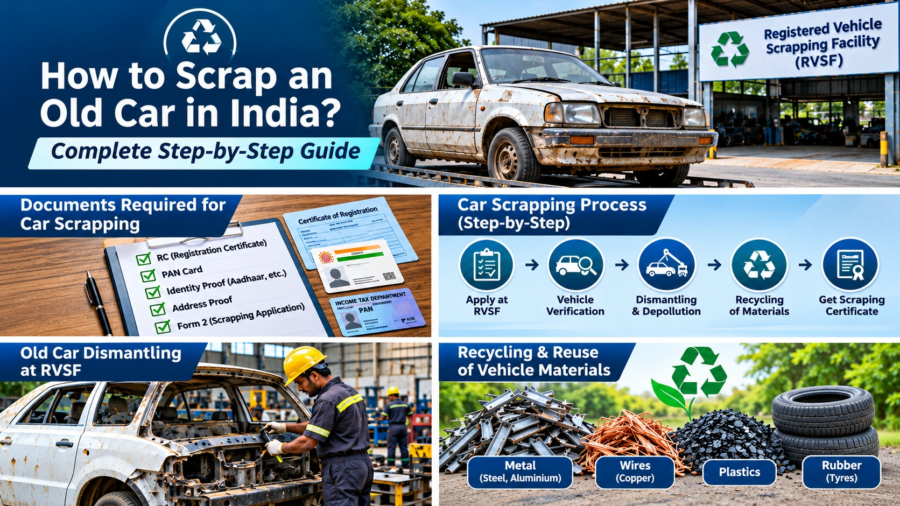
Are you planning to scrap your old car in India? If your vehicle is damaged, no longer useful, expensive to maintain or has reached the end of its usable life, vehicle scrapping may be a suitable option.
However, scrapping an old car involves more than simply transferring it to a scrap dealer. It is important to follow the proper vehicle scrapping process and complete the required documentation.
In India, vehicle owners can use a Registered Vehicle Scrapping Facility (RVSF) to scrap eligible end-of-life vehicles through an organized process.
In this guide, we will explain:
- How to scrap an old car in India.
- Documents required for car scrapping.
- Step-by-step car scrapping process.
- Benefits of choosing an authorized scrapping facility.
- Certificates issued after scrapping.
- Important things to remember before scrapping your car.
1. What Is Vehicle Scrapping?
Vehicle scrapping is the process of retiring an old, damaged, unfit or end-of-life vehicle and processing it for recycling.
During this process:
- The vehicle is checked and verified.
- Important documents are examined.
- Hazardous materials and fluids are removed.
- The vehicle is dismantled.
- Reusable and recyclable materials are separated.
- Required scrapping certificates are issued.
The main objective is to ensure that old vehicles are handled responsibly and valuable materials can be recovered and recycled.
2. When Should You Scrap Your Old Car?
There are several situations when you may consider scrapping your vehicle.
Common reasons include:
- Your car requires frequent repairs.
- Maintenance costs are increasing.
- Your vehicle is severely damaged in an accident.
- Your car is no longer economical to maintain.
- Your vehicle has become unfit for road use.
- Your car has remained unused for a long time.
- Your vehicle’s registration or fitness certificate has expired and is no longer eligible for renewal under applicable rules.
Important: Vehicle age alone does not mean that every private car must automatically be scrapped across India. Applicable registration, fitness and local restrictions must be checked. For example, specific restrictions apply to older diesel and petrol vehicles in the Delhi-NCR region.
3. Where Can You Scrap an Old Car in India?
You should choose a Registered Vehicle Scrapping Facility (RVSF).
What is an RVSF?
RVSF stands for Registered Vehicle Scrapping Facility. It is a registered facility that handles end-of-life vehicles through prescribed scrapping, dismantling and recycling procedures.
Why choose an RVSF?
- Proper vehicle verification.
- Organized scrapping procedures.
- Safe handling of vehicle fluids and hazardous materials.
- Proper dismantling and recycling.
- Relevant vehicle scrapping documentation.
- Issuance of applicable certificates.
Always verify the facility’s registration and the services it provides before handing over your vehicle.
4. Documents Required for Car Scrapping in India
Before starting the car scrapping process, prepare the required documents.
Commonly required documents and details include:
- Original Registration Certificate (RC).
- PAN card copy of the vehicle owner.
- Identity proof of the authorized representative, if applicable.
- Address proof of the vehicle owner.
- Cancelled cheque of the owner’s bank account.
- Authorization letter from the registered owner, if someone else is submitting the vehicle.
- Required vehicle and owner photographs.
- Prescribed scrapping application (Form 2).
- Valid email ID of the registered vehicle owner.
- Active mobile number linked with Aadhaar (for OTP or digital verification, where required).
Additional points:
- Keep your vehicle registration details ready.
- Check whether any loan or hypothecation is recorded against the vehicle.
- Clear applicable pending dues and resolve blacklisting or other verification issues.
- Ask the selected RVSF for its latest document checklist.
Document requirements can depend on the vehicle’s circumstances and applicable rules.
5. How to Scrap an Old Car in India? Step-by-Step Process
Now, let’s understand the complete car scrapping process.
Step 1: Find a Registered Vehicle Scrapping Facility
- Search for a registered vehicle scrapping facility.
- Check its registration and location.
- Confirm whether it accepts your vehicle category.
- Ask about vehicle collection or pickup services.
- Discuss the estimated scrap value.
Step 2: Submit Your Vehicle Details
Provide the necessary information:
- Vehicle registration number.
- Vehicle manufacturer and model.
- Vehicle type.
- Registration details.
- Vehicle condition.
- Owner information.
The facility will use these details to begin the verification process.
Step 3: Complete Document Verification
- Submit the required documents.
- Verify the ownership details.
- Complete the prescribed application.
- Resolve applicable pending dues or ownership-related issues.
- Allow the facility to complete the necessary vehicle verification.
The RVSF checks relevant records, including vehicle theft and other required database checks.
Step 4: Vehicle Inspection and Handover
- The facility may inspect the vehicle.
- Discuss the final scrap value.
- Confirm the pickup or transportation arrangements.
- Hand over the vehicle through the prescribed procedure.
- Obtain the necessary acknowledgement and documentation.
Step 5: Receive the Certificate of Deposit
After accepting the vehicle and completing the required formalities, the RVSF issues a Certificate of Deposit (CD).
This certificate provides evidence of the vehicle being deposited with the scrapping facility and the transfer of the vehicle for further treatment.
Keep this certificate safely.
Step 6: Vehicle Dismantling and Recycling
The RVSF carries out the prescribed treatment of the vehicle.
This generally includes:
- Removing fuel and other vehicle fluids.
- Handling hazardous materials safely.
- Dismantling the vehicle.
- Separating recyclable materials.
- Processing different vehicle components.
Materials such as steel, aluminium, copper, glass and rubber may be recovered for appropriate recycling.
Step 7: Receive the Certificate of Vehicle Scrapping
After completing the required scrapping and treatment process, the facility issues a Certificate of Vehicle Scrapping (CVS).
This certificate provides evidence that the vehicle has been scrapped.
The RVSF also follows the applicable procedure for updating vehicle records through the VAHAN system and notifying the relevant transport authority.
Keep your scrapping documents safely for future reference.
6. What Is the Difference Between CD and CVS?
Both certificates are important in the vehicle scrapping process.
| Certificate | Meaning |
|---|---|
| Certificate of Deposit (CD) | Evidence that the vehicle has been deposited with the scrapping facility. |
| Certificate of Vehicle Scrapping (CVS) | Evidence that the vehicle has completed the scrapping process. |
Remember: These certificates serve different purposes. Keep both documents safely.
7. What Happens to Your Car After Scrapping?
Many vehicle owners want to know what happens after handing over their old cars.
The vehicle goes through different stages.
- Depollution: Fuel, oils and other hazardous fluids are removed.
- Dismantling: The vehicle is taken apart systematically.
- Material separation: Different materials are separated.
- Recycling: Suitable materials are sent for recycling and recovery.
- Responsible disposal: Non-recyclable and hazardous materials are handled through appropriate channels.
This process helps recover valuable resources and manage automotive waste responsibly.
8. Benefits of Choosing an Authorized Car Scrapping Facility
Choosing an appropriate RVSF provides several advantages.
- Proper documentation: The required vehicle scrapping certificates are issued.
- Organized process: Vehicle verification and scrapping follow prescribed procedures.
- Safe dismantling: Vehicle components and fluids are handled appropriately.
- Material recovery: Valuable materials can be recovered for recycling.
- Better record management: Relevant vehicle records can be updated through the prescribed system.
- Convenience: Some facilities may also offer vehicle pickup services.
9. Can You Get Benefits After Scrapping Your Old Car?
Yes, eligible vehicle owners may receive certain benefits under applicable government notifications and state policies.
These may include:
- Motor vehicle tax concessions on purchasing an eligible new vehicle against a Certificate of Deposit.
- Registration fee exemption for an eligible new vehicle.
- Discounts offered by participating automobile manufacturers.
- Other incentives announced by the relevant government authorities.
The availability and amount of benefits depend on the applicable notifications, state policies, vehicle category and eligibility conditions.
Always confirm the current benefits before making a purchase decision.
10. Important Things to Remember Before Scrapping Your Car
Before handing over your old car, follow this checklist:
- Verify the RVSF’s registration.
- Keep the original RC and required documents ready.
- Check outstanding loans and hypothecation.
- Resolve applicable pending dues.
- Remove your personal belongings.
- Discuss the scrap value and payment terms.
- Obtain the Certificate of Deposit.
- Obtain the Certificate of Vehicle Scrapping.
- Check the vehicle registration record after completion.
- Inform your insurance company and follow its cancellation or closure procedure.
11. Frequently Asked Questions (FAQs)
Q1. How can I scrap my old car in India?
You can scrap your old car by contacting a Registered Vehicle Scrapping Facility (RVSF), submitting the required documents, completing vehicle verification and handing over the vehicle for prescribed scrapping and recycling.
Q2. What documents are required to scrap a car?
Common documents include the original RC, PAN card copy, owner’s address proof, cancelled cheque, required identity proof and authorization documents where applicable.
Q3. Can I scrap a non-running car?
A non-running or damaged car may be accepted for scrapping, subject to verification and applicable requirements. Ask the RVSF whether vehicle pickup is available.
Q4. What is an RVSF?
RVSF stands for Registered Vehicle Scrapping Facility. It is a registered facility that handles end-of-life vehicles through prescribed scrapping and recycling procedures.
Q5. What is a Certificate of Deposit?
A Certificate of Deposit (CD) is issued when the vehicle is deposited with an RVSF. It serves as evidence of the deposit and transfer for further treatment.
Q6. What is a Certificate of Vehicle Scrapping?
A Certificate of Vehicle Scrapping (CVS) is issued after the prescribed vehicle scrapping process has been completed.
Q7. Can I scrap a car registered in another state?
An RVSF can accept eligible vehicles registered in other Indian states or Union Territories, subject to applicable procedures and verification.
Q8. Do I get money for scrapping my old car?
The scrap value depends on factors such as the vehicle’s weight, material composition, condition and prevailing scrap rates. Discuss the price and payment terms with the facility before handing over the vehicle.
Q9. What happens to my car after scrapping?
The vehicle undergoes depollution and dismantling. Recyclable materials are separated for appropriate recovery and recycling.
Conclusion
Scrapping an old car in India requires proper documentation, vehicle verification and the correct scrapping procedure.
Choosing a Registered Vehicle Scrapping Facility (RVSF) helps ensure that your vehicle is handled through an organized process.
Whether your car is old, damaged, unused or no longer economical to maintain, understanding the car scrapping process can help you make an informed decision.
Looking to scrap your old car?
Connect with MotoScrapland to learn more about vehicle scrapping and get assistance with the next steps.
MotoScrapland – Making Vehicle Scrapping Simple and Responsible. (https://motoscrapland.com/)
Add a Comment