

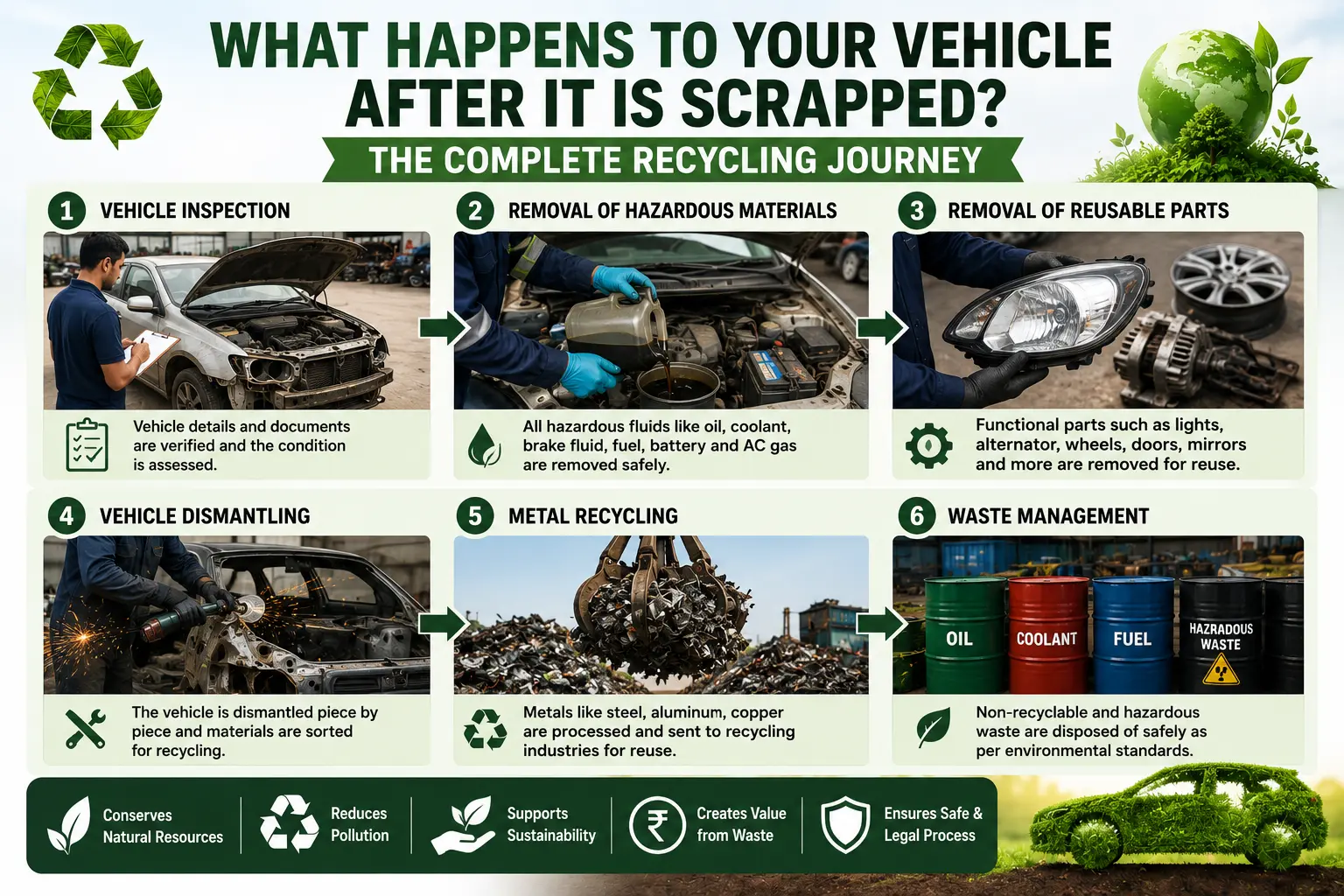
What Happens to Your Vehicle After It Is Scrapped? | The Complete Recycling Journey
Have you ever wondered what happens after your old car, bike, truck, or commercial vehicle is handed over to a vehicle scrapping facility? Many people assume the vehicle is simply crushed and discarded, but the reality is very different.
Authorized vehicle scrapping follows a systematic recycling process that helps recover valuable materials, safely dispose of hazardous substances, and reduce environmental waste. Every stage is carefully managed to maximize recycling efficiency.
🚗 Step 1: Vehicle Inspection
Before dismantling begins, the vehicle undergoes a complete inspection to verify ownership and identify reusable components.
- ✔ Vehicle identity verification
- ✔ Registration document check
- ✔ Engine & chassis number verification
- ✔ Overall condition assessment
⚠ Step 2: Safe Removal of Hazardous Materials
Hazardous fluids and materials are removed carefully to prevent environmental contamination before dismantling begins.
✔ Engine Oil
✔ Brake Fluid
✔ Coolant
✔ Fuel
✔ Vehicle Battery
✔ Air Conditioning Gas
🔧 Step 3: Recovery of Reusable Parts
Many vehicle components remain usable even after the vehicle reaches the end of its life. These parts are carefully removed and inspected.
⚙ Engine Components
Alternator, starter motor and other reusable mechanical parts.
🚘 Exterior Parts
Doors, mirrors, lights, alloy wheels and body panels.
🪑 Interior Parts
Seats, dashboard components and interior accessories.
🏭 Step 4: Vehicle Dismantling
Once reusable components are removed, the remaining vehicle is dismantled using professional equipment. Different materials are separated for recycling.
- ✔ Steel
- ✔ Aluminum
- ✔ Copper
- ✔ Glass
- ✔ Plastic
- ✔ Rubber
♻ Step 5: Recycling Valuable Materials
Recovered metals are sent to recycling plants where they are processed into raw materials for manufacturing new products.
- ✔ New automobiles
- ✔ Construction materials
- ✔ Industrial equipment
- ✔ Household appliances
🌍 Step 6: Environmentally Safe Waste Disposal
Non-recyclable materials and hazardous waste are disposed of safely according to environmental standards, reducing pollution and protecting natural resources.
⭐ Benefits of Professional Vehicle Recycling
- ✔ Conserves natural resources
- ✔ Reduces landfill waste
- ✔ Supports sustainable manufacturing
- ✔ Lowers industrial energy consumption
- ✔ Encourages responsible recycling
🏅 Why Choose an Authorized Vehicle Scrapping Facility?
Authorized scrapping facilities follow legal procedures, maintain proper records, ensure environmentally responsible dismantling, and provide complete transparency throughout the recycling process.
❓ Frequently Asked Questions
Can vehicle parts be reused after scrapping?
Yes. Many components that remain in good condition can be refurbished and reused after proper inspection.
What materials are recycled?
Steel, aluminum, copper, plastic, rubber, and glass are commonly recovered and recycled.
Why is authorized scrapping important?
Authorized facilities ensure safe recycling, proper documentation, and environmentally responsible disposal practices.
🚘 Give Your Old Vehicle a Responsible New Beginning
Professional vehicle scrapping is more than disposal—it's a complete recycling journey that helps recover valuable materials, protect the environment, and support sustainable development.
📞 Call Now 💬 WhatsApp NowWhat Happens to Your Vehicle After It Is Scrapped? | The Complete Recycling Journey
Have you ever wondered what happens after your old car, bike, truck, or commercial vehicle is handed over to a vehicle scrapping facility? Many people assume the vehicle is simply crushed and discarded, but the reality is very different.
Authorized vehicle scrapping follows a systematic recycling process that helps recover valuable materials, safely dispose of hazardous substances, and reduce environmental waste. Every stage is carefully managed to maximize recycling efficiency.
🚗 Step 1: Vehicle Inspection
Before dismantling begins, the vehicle undergoes a complete inspection to verify ownership and identify reusable components.
- ✔ Vehicle identity verification
- ✔ Registration document check
- ✔ Engine & chassis number verification
- ✔ Overall condition assessment
⚠ Step 2: Safe Removal of Hazardous Materials
Hazardous fluids and materials are removed carefully to prevent environmental contamination before dismantling begins.
✔ Engine Oil
✔ Brake Fluid
✔ Coolant
✔ Fuel
✔ Vehicle Battery
✔ Air Conditioning Gas
🔧 Step 3: Recovery of Reusable Parts
Many vehicle components remain usable even after the vehicle reaches the end of its life. These parts are carefully removed and inspected.
⚙ Engine Components
Alternator, starter motor and other reusable mechanical parts.
🚘 Exterior Parts
Doors, mirrors, lights, alloy wheels and body panels.
🪑 Interior Parts
Seats, dashboard components and interior accessories.
🏭 Step 4: Vehicle Dismantling
Once reusable components are removed, the remaining vehicle is dismantled using professional equipment. Different materials are separated for recycling.
- ✔ Steel
- ✔ Aluminum
- ✔ Copper
- ✔ Glass
- ✔ Plastic
- ✔ Rubber
♻ Step 5: Recycling Valuable Materials
Recovered metals are sent to recycling plants where they are processed into raw materials for manufacturing new products.
- ✔ New automobiles
- ✔ Construction materials
- ✔ Industrial equipment
- ✔ Household appliances
🌍 Step 6: Environmentally Safe Waste Disposal
Non-recyclable materials and hazardous waste are disposed of safely according to environmental standards, reducing pollution and protecting natural resources.
⭐ Benefits of Professional Vehicle Recycling
- ✔ Conserves natural resources
- ✔ Reduces landfill waste
- ✔ Supports sustainable manufacturing
- ✔ Lowers industrial energy consumption
- ✔ Encourages responsible recycling
🏅 Why Choose an Authorized Vehicle Scrapping Facility?
Authorized scrapping facilities follow legal procedures, maintain proper records, ensure environmentally responsible dismantling, and provide complete transparency throughout the recycling process.
❓ Frequently Asked Questions
Can vehicle parts be reused after scrapping?
Yes. Many components that remain in good condition can be refurbished and reused after proper inspection.
What materials are recycled?
Steel, aluminum, copper, plastic, rubber, and glass are commonly recovered and recycled.
Why is authorized scrapping important?
Authorized facilities ensure safe recycling, proper documentation, and environmentally responsible disposal practices.
🚘 Give Your Old Vehicle a Responsible New Beginning
Professional vehicle scrapping is more than disposal—it's a complete recycling journey that helps recover valuable materials, protect the environment, and support sustainable development.
📞 Call Now 💬 WhatsApp Now
Add a Comment